


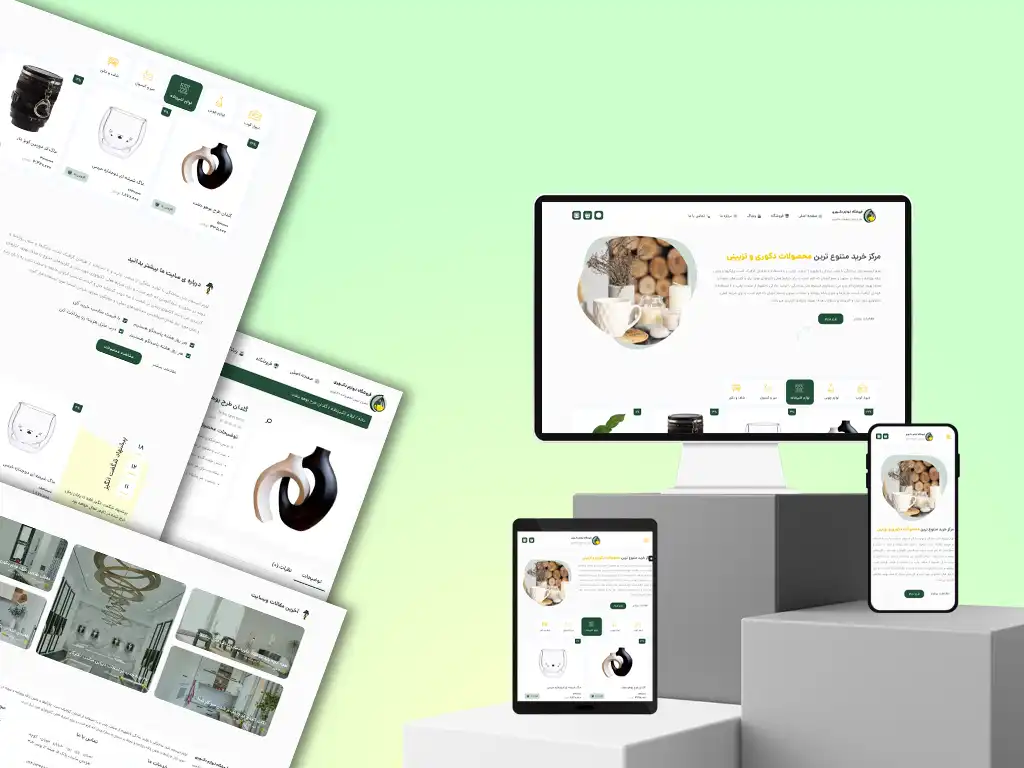
Designing a website for online sales of decorative products
Why is it necessary to design a website for online sales of decorative products?
In today’s world, where a simple touch on a phone screen connects anyone to the entire globe, businesses can no longer rely solely on physical storefronts. If you own a home decor store, you likely know that your products are “emotional”; meaning, when a customer buys a specific vase or a painting, they are actually buying the dream of transforming their living space. But how do you bring this dream to customers who may never happen to walk past your shop? The answer is simple: the design of an online store for home decor products.
Below, we explore why having a website is no longer an option, but a necessity for you:
A Storefront That Never Closes Your physical store has business hours, but your website is awake 24/7. Imagine your customer is browsing decor ideas on Pinterest at midnight, suddenly discovers your product, and makes a purchase right then and there. By designing an online store for home decor products, you keep your sales opportunities alive every hour of the day and night.
Persuasive Visual Presentation (The Power of Imagery) Decor products are sold through the eyes. In a professional website, you can utilize high-quality photos, short videos showing product details, and even interactive features so the customer can precisely visualize how that product will look in their own home. This level of persuasion is not always possible within the limited space of a physical shop.
Expanding Your Market from the Neighborhood to the Entire Country You are no longer limited to customers in one specific area or city. With an optimized website, your products appear in Google searches for people kilometers away who are looking to change their home decor. In essence, your website is a bridge that carries your art and taste across the entire country.
Building Trust and Branding Nowadays, customers search for your brand name on Google before making a purchase. Having a sleek, user-friendly website tells the customer that you are a credible and professional business.
If you want to stand out in today’s competitive market and multiply your sales, it is time to stop relying on traditional methods and invest in the design of an online store for home decor products.
What are the key features in designing a website for online sales of decorative products?
When it comes to the design of an online store for home decor products, you must realize that you aren’t just building a shop; you are creating a “digital gallery.” Since decorative products are deeply tied to taste, mood, and aesthetics, the features you integrate into your site must be able to fill the void left by the inability to touch or see the product up close.
To ensure your customers are captivated from the first moment and click the “Buy” button with confidence, prioritize these key features:
Advanced Image Gallery and High-Quality Zoom In decor, details are everything. A customer wants to see the texture of a sofa’s fabric, the shimmer of a vase, or the delicacy of a painting. Therefore, a “zoom-in” feature and providing multiple photos from different angles (and even short 360-degree videos) are the most critical parts of designing an online store for home decor products.
Smart Filtering System and Precise Categorization Imagine a customer is looking for “modern gold chandeliers.” They shouldn’t have to wander through hundreds of unrelated products. Precise filters based on color, style (classic/modern), material, and price range make the shopping experience enjoyable and increase the speed of finding the desired product.
“Decor Set Suggestions” Section (Cross-Selling) One of the most attractive features is suggesting product combinations. For example, when a user views a coffee table, the site could suggest: “This table pairs perfectly with this vase and this tablecloth.” This not only helps the customer with their interior design but also increases your average order value.
Review System and Customer-Uploaded Photos Nothing builds trust more than seeing a product in a real person’s home. Allow your customers to upload photos of the products they’ve purchased in the reviews section. This “social proof” works wonders.
Simple User Experience (UX) and Fast Checkout If the payment process is complicated, the customer may change their mind at the last second. Having a secure payment gateway, a transparent shopping cart, and a short ordering process will significantly boost your conversion rate.
The ultimate goal of the design of an online store for home decor products is to turn a visitor into a lover of your brand. By combining visual beauty with functional features, you build a store that is both eye-catching and profitable.
How does designing a website for online sales of decorative products help generate income?
You might have wondered, ‘I already have sales, so why should I invest in an e-commerce website for home decor?’ The answer comes down to one word: scalability. In a traditional store, your income is limited by foot traffic, but in the digital world, your revenue ceiling is completely removed.
Let’s look at exactly how a professional website transforms into a revenue-generating machine:
Converting Visitors into Customers (Around the Clock)
In the decor industry, many purchases are driven by impulse—spontaneous, emotional decisions. When someone browsing photos of stylish homes at 11 PM discovers your product, a website allows the sale to happen instantly. Without one, you miss out on this massive stream of potential sales every single night.
Reducing Operational Costs and Boosting Net Profit
Renting luxury retail spaces in high-traffic areas is incredibly expensive. With an e-commerce website, you can serve customers nationwide from a small warehouse in a more affordable area. This slashes your overhead costs, directly increasing the net profit on every order.
Targeted and Cost-Effective Marketing
Traditional advertising relies on distributing flyers to everyone, but online, you market directly to the person searching Google for ‘buy decorative accessories.’ This means attracting high-intent customers who are ‘ready to buy,’ resulting in a much higher conversion rate.
Cross-Selling and Increasing Average Order Value
A website enables you to use AI and recommendation engines to suggest related products. For instance, someone buying a mirror likely needs a console table or wall art. This cross-selling strategy increases the total value of each order, growing your revenue without needing to acquire new customers.
Designing an e-commerce website for decor products isn’t just about having an online presence; it is about building an automated sales system that promotes your brand and registers orders while you rest. Essentially, your website is an employee that never sleeps and generates income for you 24/7.
Other benefits of designing a website for online sales of decorative products...
So far, we have understood how a website drives revenue and attracts customers; however, the appeal of designing an e-commerce website for decor products goes beyond just money and sales. Your website is, in fact, the ‘beating heart’ of your brand, offering long-term strategic benefits that will set you apart from your competitors in the market.
Let’s look at these strategic and human-centric advantages that might not be obvious at first glance:
Building a ‘Brand Story’ (Storytelling)
Every decor product tells a story. On a website, you have ample space to share the philosophy behind your designs, the materials used, or even your inspirations. This builds an emotional connection with the customer. When a buyer knows the love and care poured into a handmade vase, they look past the price tag—they are buying its ‘value.’
Effortless Inventory and Price Management
Updating prices or stock availability in a printed catalog, or even messaging customers one by one on Instagram, can be an absolute nightmare. However, with a dedicated home decor e-commerce website, you can update prices with a single click, and any out-of-stock product is automatically flagged. This means more organization and significantly less stress for you.
Precise Customer Behavior Analysis (True Buyer Insight)
In a physical store, you can only guess what your customers want, but on a website, you can actually ‘see’ it. You learn which colors get the most clicks, which items are added to carts but abandoned, and which cities generate the most traffic. This data empowers you to design and manufacture new products tailored perfectly to market tastes.
Independence from Social Media Platforms
Instagram and Telegram are excellent tools, but you do not own them. A sudden algorithm shift or a single false report can wipe out years of hard work overnight. Conversely, your custom e-commerce website is your personal digital property—a space where you define the rules, and no one can cut off your access to your audience.
Having a website means having credibility, order, and independence. It elevates you from a simple seller into a true ‘brand owner’ standing on your own feet.
Main page:

Your own page
Emotional and Inspiring Hero Section
At the top of the page, instead of dry product photos, use images that showcase a ‘lifestyle.’ For example, instead of just a photo of a rug, show a cozy corner of a home with a cup of coffee and that exact rug. The goal is to make customers visualize that buying this product will make their own home just as beautiful and peaceful.
Quick Access to Categories (Navigation)
Customers should never feel confused while trying to find something. Use beautiful, minimalist icons to place main categories (such as Accessories, Lighting, and Wall Art) right in plain sight. In home decor e-commerce website design, simple navigation means respecting the customer’s time.
Trending and Best-Sellers Showcase
Many users don’t know exactly what they want until they see it! Creating a ‘Best Sellers’ or ‘Editor’s Picks’ section helps users see what is popular and make faster decisions. This section acts like a shopping guide right by the customer’s side.
Building Trust at First Sight (Trust Signals)
Further down the homepage, dedicate a section to your competitive advantages, such as ‘Secure Shipping,’ ‘Money-Back Guarantee,’ or ‘Free Styling Consultation.’ When customers see that you stand behind your products, they lower their guard and shop with greater peace of mind.
Clear Call to Action (CTA)
Every section of the homepage should guide the user somewhere. Instead of basic buttons, use persuasive phrases like ‘Start Transforming My Home’ or ‘Explore the New Collection.’ Your homepage must be a blend of ‘art’ and the ‘science of selling.’ If you approach home decor e-commerce website design with a focus on user emotions and seamless accessibility, your website will evolve from a simple tool into a professional salesman.
Store section:

Main section of the store page
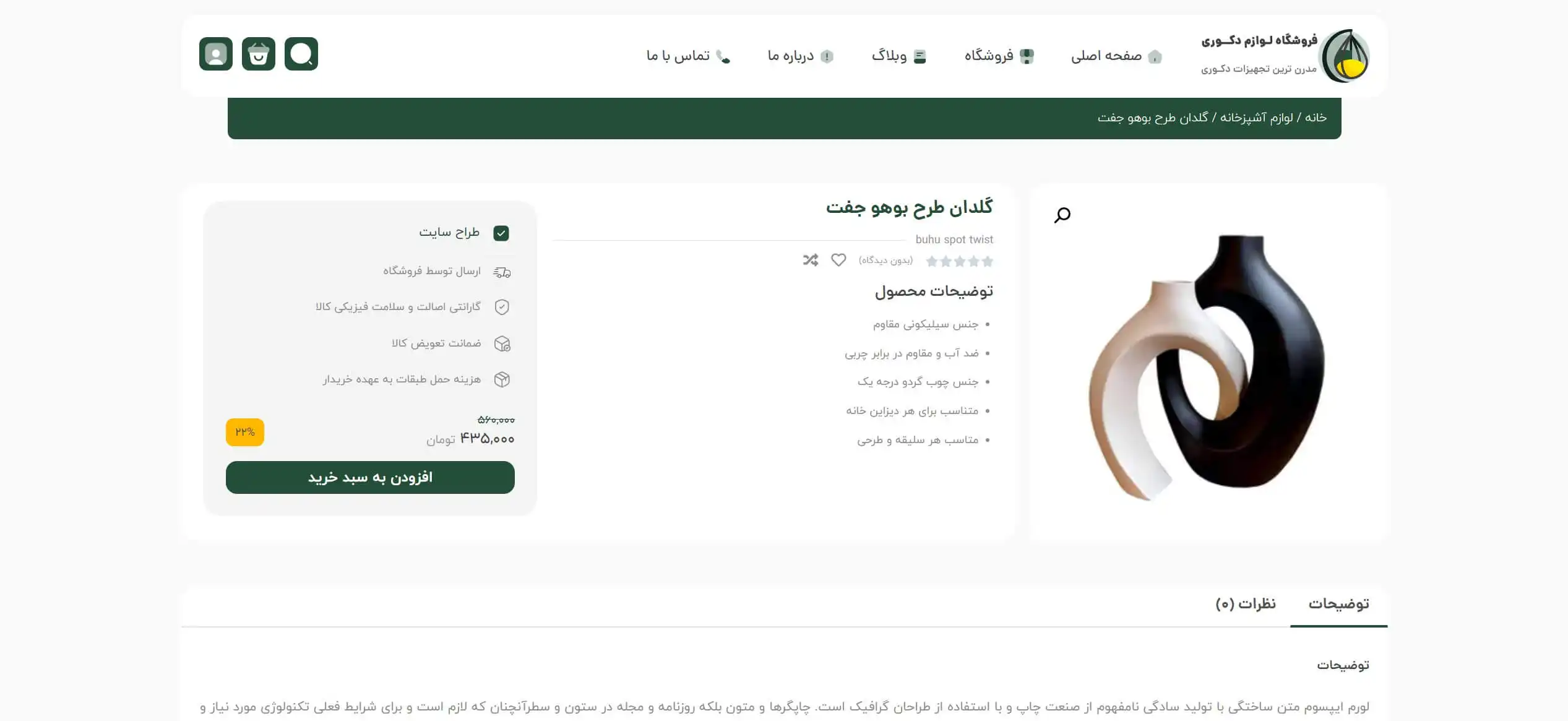
Main section of the store page
If your website’s homepage is the ‘storefront window,’ the shop section is the ‘inside of the store’—the place where customers spend time, compare items, and ultimately make a buying decision. In designing an e-commerce website for decor products, the shop section should not look like a dry list of goods; instead, it must convey the feeling of strolling through an art gallery, keeping users engaged and encouraging them to explore more products.
To transform your shop section into a sales machine, practice these golden rules:
Visual Layout and White Space
Decor products need room to breathe in order to be truly seen. Avoid cluttering the page with too many items in a single row. Utilizing white space in home decor e-commerce website design allows each product to stand out on its own and prevents user eye fatigue. Consistent photos with neutral backgrounds make the shop’s appearance look significantly more professional.
Smart and Fast Filters (The Magic Filters)
A decor customer usually has a specific ‘color’ or ‘style’ in mind. Instead of forcing them to flip through countless pages, provide precise filtering options:
– By Color: (e.g., only gold or navy blue products)
– By Style: (Modern, Classic, Minimalist)
– By Price: (For every budget)
This functionality makes users feel that you truly understand their needs.
Attractive and Functional Product Cards
Every item in the shop section is displayed within a ‘product card.’ In addition to the photo, price, and name, implement a ‘Quick View’ feature on these cards so users can see brief product details without leaving the shop page. Furthermore, adding a small ‘heart’ icon for a wishlist encourages users to save items they like and return to purchase them later.
Flexible Sorting System
Let users decide what they want to see first: ‘Newest,’ ‘Lowest Price,’ or ‘Most Popular.’ Providing this effortless control gives customers a sense of ease and empowerment.
The shop section is the beating heart of your business. If you balance ‘visual beauty’ with ‘seamless accessibility’ in your home decor e-commerce website design, customers will joyfully browse your site, and the likelihood of them filling their shopping carts with more items will increase dramatically.
Blog (news and articles)
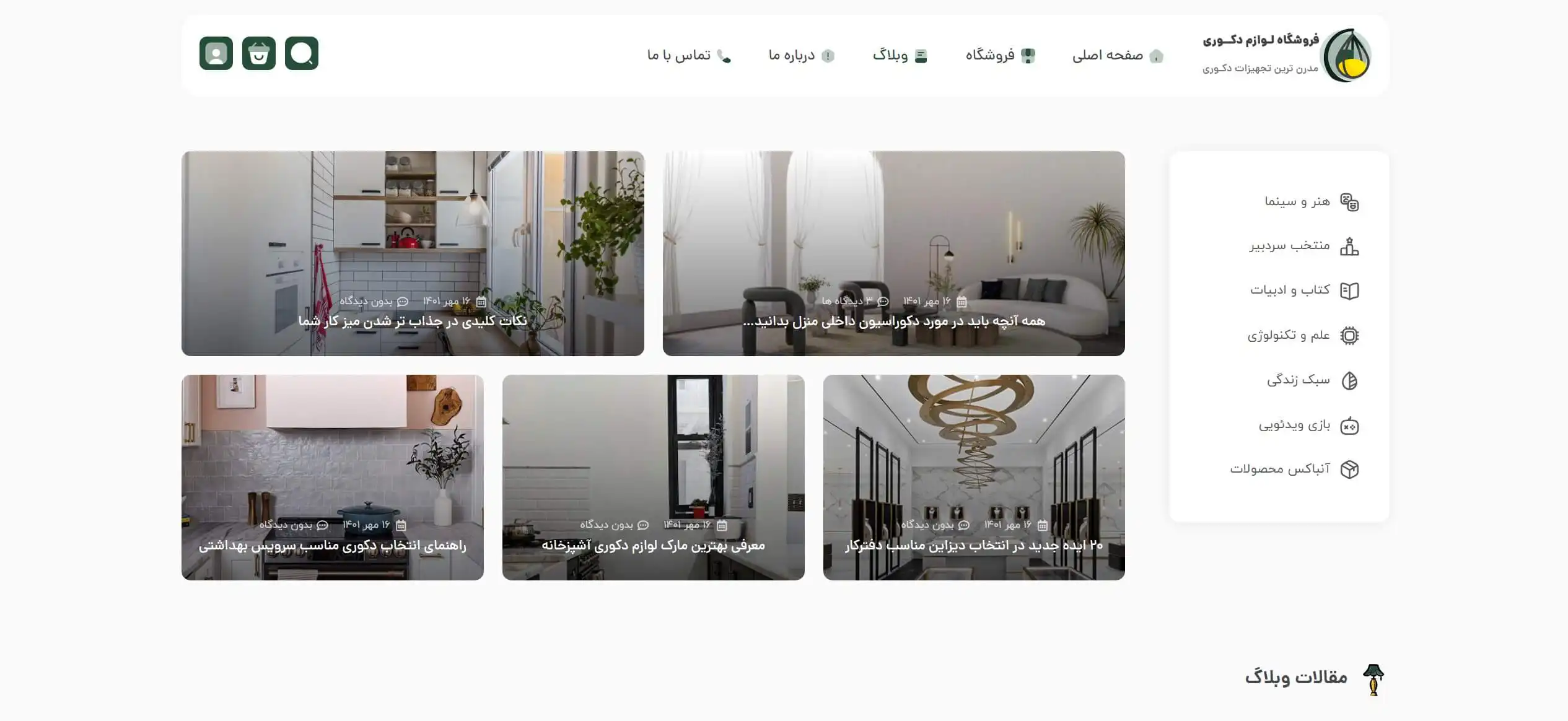
Professional article classification
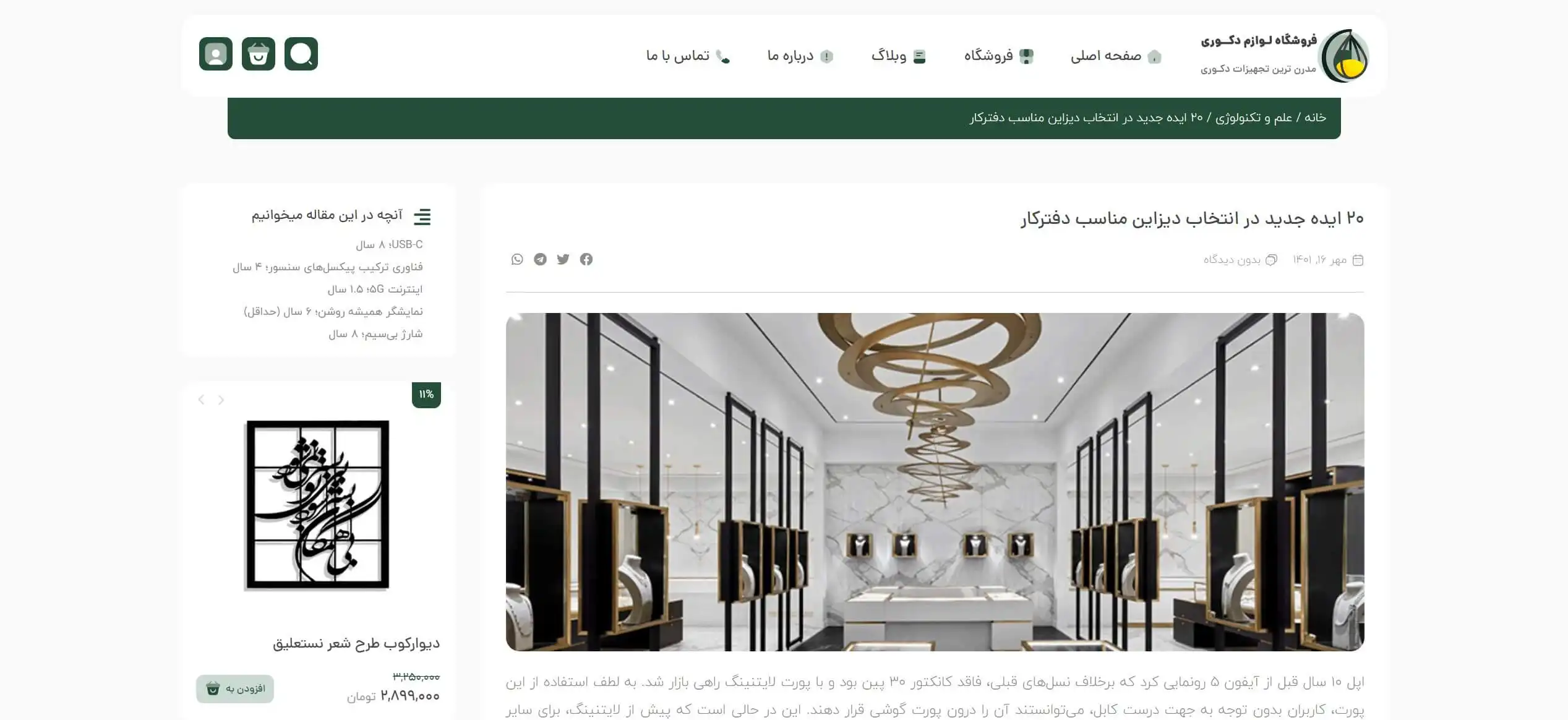
Professional article classification
Many business owners think a blog is just for sharing news, but in reality, a blog in home decor e-commerce website design functions as a ‘free decor consultant.’ Imagine your customer wants to redesign their home but doesn’t know which curtain color complements their gray wall. If you have an article on your blog titled ‘The Guide to Matching Colors in Modern Decor,’ you will attract that customer from Google and build trust as an ‘expert.’
To ensure your blog section doesn’t just become a dusty archive and genuinely drives sales, integrate these strategies into its design:
Educational and How-To Content
Instead of simply saying ‘buy this vase,’ write articles that actually help the user. For example: ‘5 Tricks for Decorating Small Homes.’ When users enter your site through this content, you provide them with value first and then introduce your product as the solution. This is how you convert an audience into customers through trust.
Linking Articles to Products (Internal Linking)
This is the smartest part of home decor e-commerce website design. In the middle of an article about ‘Bedroom Lighting,’ place a hyperlink on the words ‘decorative lamps’ that directs the user straight to the shop section. This creates a seamless journey for the user from ‘education’ to ‘purchase.’
Inspiring and Readable Visual Design
Decor articles are meaningless without photos. The blog’s design should allow large, high-quality images to sit beautifully alongside the text. Using bullet points, engaging headings, and clean spacing between paragraphs ensures users enjoy reading the content and spend more time on your site (which is excellent for SEO).
Comments Section and User Engagement
Turn your blog into a space for conversation. Ask users: ‘What color did you choose for your living room?’. This interaction builds a sense of community and makes customers feel that you truly care about their needs.
A blog is the driving engine of your SEO. By approaching home decor e-commerce website design with an active, practical blog, you no longer wait around for customers; instead, you draw them from across the web straight to your brand by creating valuable content.
Body pages (About Us, Contact Us, and FAQs)
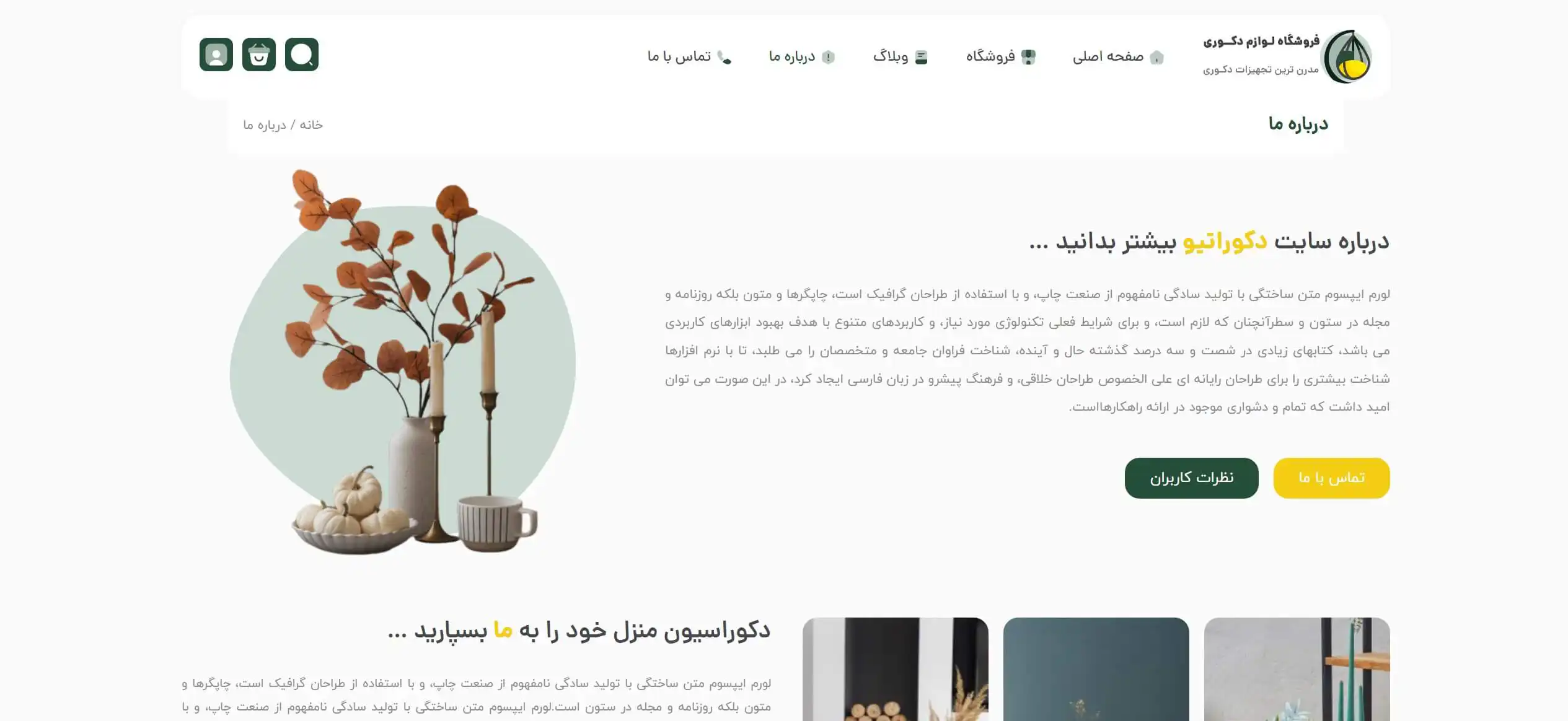
Minimalist and user-friendly About Us page
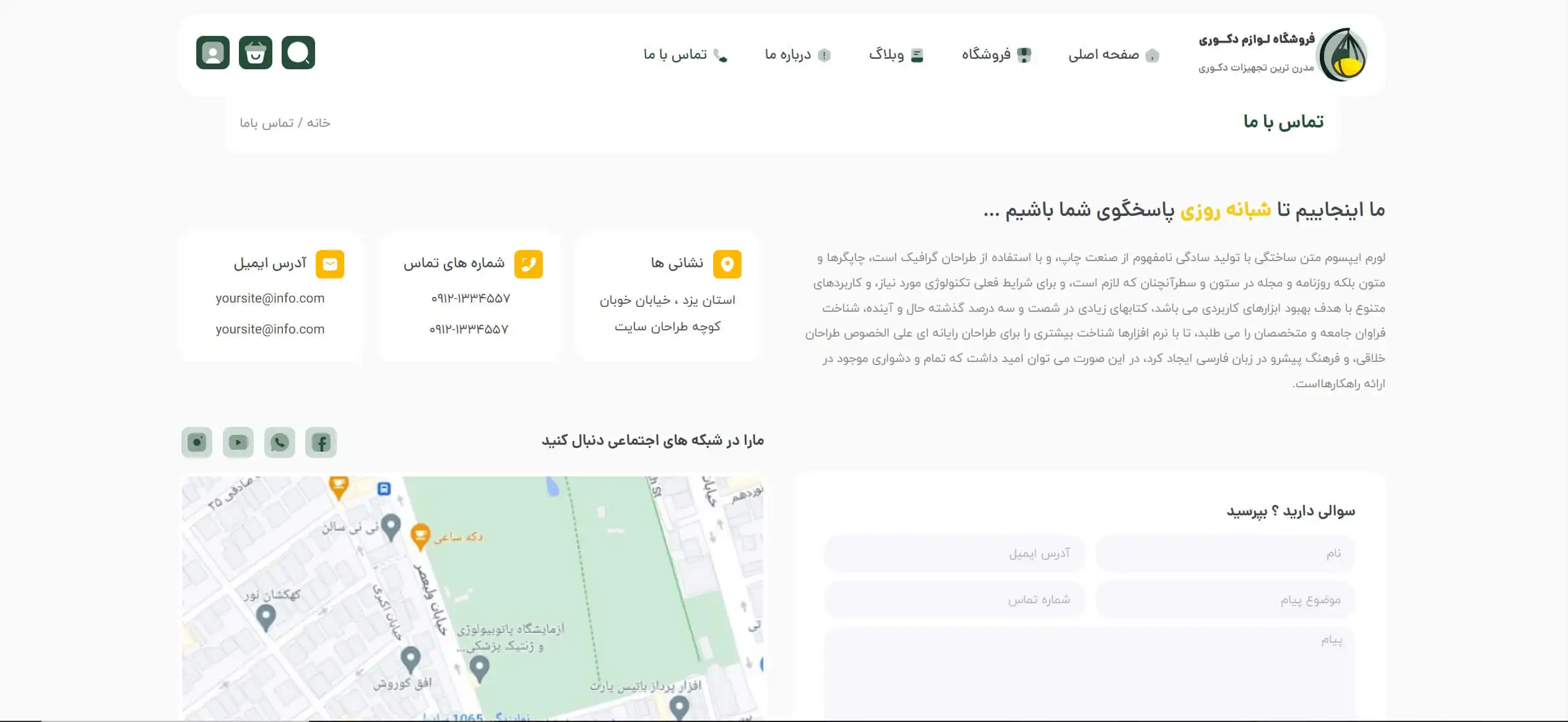
Minimalist and user-friendly About Us page
Many people overlook structural or informational pages when designing an e-commerce website for decor products, viewing them merely as ‘supplementary sections.’ However, the truth is that in the world of online shopping—where customers cannot touch the product or see the seller—these pages serve as the ‘bridge of trust.’ If a user is about to spend a significant amount of money on their home decor, they will first look for an answer to one question: ‘Is this store real and trustworthy?’
Let’s look at how to transform
these three pages into tools for persuading customers:
The ‘About Us’ Page: Beyond a Dry Introduction
On this page, instead of writing cliché phrases like ‘we are the best,’ showcase your human side. Share your origin story, write about your passion for the art of decor, and if possible, include a photo of your team or workspace. In home decor e-commerce website design, when customers know that there are people with taste and purpose behind the site, they feel a much greater sense of security.
The ‘Contact Us’ Page:
Accessibility and Warmth
This page shouldn’t just feature a standard contact form and a phone number. Tell your customers that you are eager to hear from them. Including a Google Map (if you have an office), quick links to social media, and specifying your support hours shows that you run an organized business and that the customer will never be left stranded if an issue arises.
The ‘FAQ’ Page: Reducing Shopping Anxiety
Decor customers have unique concerns: ‘Will the item break during shipping?’, ‘What if the product’s color looks different from the photo?’, or ‘What is the exact delivery timeframe?’. By answering these questions in a well-organized and categorized layout, you not only relieve pressure from your support team but also eliminate customer hesitation right at the moment of purchase.
These pages are, in fact, the ‘ethical warranty’ of your business. If you manage to convey honesty, expertise, and accountability through these pages in your home decor e-commerce website design, customers will click the ‘place order’ button with a smile and absolute confidence.
Other features of designing a website for online sales of decorative products
- Responsive design
- Direct banking portal
- Receive the National Trust Symbol
- Ability to insert bilingual or multilingual content
- Ability to define brand and category pages
- Smart inventory and warehouse management
- SEO Base (ability to get rank 1 on Google)
- Unlimited capabilities (number of brands, categories, labels, etc.)
