

When a patient trusts Google instead of friends’ recommendations
Imagine it’s 2 a.m. A patient is tossing and turning in bed with a throbbing pain in a lower tooth. In the past, this patient would start the next morning with a phone call from a friend or family member: “Do you know a good dentist?” But today, our world has changed. Now, he or she pulls out his or her smartphone and, in the darkness of the room, Googles “best dentist for root canals.”
This is the “digital boomerang” effect—a shift where word-of-mouth recommendations have given way to Google’s first-page results. Today’s patient has already “analyzed” you before ever speaking to your receptionist or even seeing your clinic’s address. They have viewed your photos, read reviews from others, and likely examined your articles. If your name doesn’t appear in the search results at this critical moment, or if your website fails to inspire trust, you effectively do not exist to them. In reality, SEO for a dental practice is no longer a luxury option just to “look modern”; it is the only way to ensure you are accessible when a patient needs you. If you aren’t visible on Google, you are essentially preventing patients from finding you.
سایت شما: پزشک یا منشی؟ (تفاوت اطلاعات دادن و درمان کردن)
Many dentists think that having a website means having a “digital brochure” where you list services, opening hours and a few photos of the equipment. But let’s be honest: such a site is like a “dry and soulless secretary” that only answers questions and has no charm. The secretary only provides information, but the doctor “treats.”
A persuasive website should play the role of a “doctor.” That is, it should start treating the patient mentally before they even sit in your chair. What does it mean to treat the patient mentally? It means that when the patient enters the site, they feel that you understand their pain, understand their fear, and have a specific solution for them. Here’s the difference: A “secretary-like” site says, “We do implants,” but a “doctor-like” site says, “We restore your lost smile with painless technologies.”
When you invest in SEO for your dental website, you shouldn’t just focus on driving traffic, you should also create content that will transform the visitor from “searcher” to “accepted patient.” Your website should be able to start the healing process with its words.
7 golden seconds for the fate of your chair
In digital psychology, we have a concept called the “7-second rule.” When a user clicks on a link on your site, their brain processes thousands of signals in less than 7 seconds to decide: “Is this doctor right for me or should I hit the back button and go to a competitor?”
In those 7 seconds, the patient isn’t looking for your credentials; they’re looking for “feel.” Page load speed, visual order, soothing colors, and a clear message that says “I’m here to help you” are all being evaluated in this short period of time. If your site is slow, or its design is reminiscent of 1980s websites, the patient will subconsciously get the feeling that “if this doctor doesn’t care about his website, he probably doesn’t care about his clinic equipment or his care.”
This is where the magic of combining dental website design and SEO happens. SEO brings the patient to your door, but it’s the design and user experience that invites them in and puts them in the chair. The first 7 seconds are the difference between a “wasteful click” and a “loyal patient.” In those 7 seconds, will your website earn their trust or send them to your competitor?
11 Reasons Why Websites for Dentists Are Successful
- Significant increase in patient recruitment and clinic revenue
- Becoming an expert and personal branding authority
- 24-hour patient access to information and services
- Automate appointment booking and reduce telephone traffic
- Gain trust quickly by displaying your resume and certifications
- Showcasing successful experiences and positive comments from previous patients
- Reducing traditional and paper advertising costs
- Strong presence in Google search results (SEO)
- Educating patients and reducing repetitive questions in the office
- Detailed analysis of customer behavior and market needs
- Effective competition with leading doctors in the city and country
In this section, we delve into one of the most sensitive aspects of patient psychology. For many people, dentistry is associated with unpleasant memories, the sound of the drill, and the pungent odor of chemicals. Your website’s task is to break down this “wall of fear” even before the patient steps into the clinic.
Visual Architecture: Designing a Website That Kills Fear
From the feeling of “hospital” to the feeling of “peace”
Let’s be honest; most dental websites make a common strategic mistake: they try to look “too sterile.” Blank white pages, stock photos of dentures, and cold colors that are more reminiscent of an operating room than a treatment environment. But the truth is, when a patient enters your site with anxiety, seeing an “overly sterile” space subconsciously reinforces their sense of “being sick” and “fear of pain.”
Modern visual architecture in dental SEO seeks to break away from traditional clichés. The goal is to transform the website from a mere “medical center” into a “center for healing and tranquility.”
Instead of absolute white, we should utilize pastel tones, calming blues, or nature-inspired greens that help lower the heart rate. Rather than using synthetic stock photos, the focus should be on imagery of a warm clinic environment, genuine smiles, and soft visual elements (such as rounded corners for buttons).
The objective is that the moment a patient enters the site, instead of thinking, “I am visiting a dentist,” they feel, “I am going somewhere where I will be cared for.” When the visuals of your site convey the feeling of a “spa” or a relaxing environment, the patient’s defensive guard drops, paving a smoother path toward accepting treatment.
User Journey or “Relief Map”: From Anxiety to Booking an Appointment
For a patient, entering a dental website is like navigating a path. At the beginning of this journey, they are “wounded” and “anxious”; with a lot of questions in their head and a deep fear in their heart. If your website design is complicated and leaves the user in a maze of endless menus, this anxiety is doubled. Here we are dealing with the concept of a “relief map”; that is, designing a path where each click removes a layer of stress for the patient.
This path should be linear and logical: first the patient is confronted with empathetic content that says “we know where you hurt” (meeting an emotional need), then they are confronted with evidence of expertise and successful outcomes to convince them (meeting a logical need), and finally, with a simple, frictionless button, they book their appointment (meeting a practical need).
In dental SEO strategy, we’re not just looking to bring in visitors, we’re looking to manage their experience. If the user journey from “problem search” to “book an appointment” takes more than 3 or 4 clicks, you’re essentially telling an anxious patient, “We’re hard to reach.” The relief plan is about removing any complexity; it’s about moving the patient from a world of questions and fears to a world of answers and peace as quickly as possible.
The Visual Magic of “Before and After”: Turning a Photo Gallery into a “Change Story”
Many dentists design their “before and after” sections as sterile albums of close-up tooth photos. While these images may be technically accurate, they feel emotionally “cold”—and sometimes even off-putting. Patients do not simply want to see how a tooth was whitened or an implant placed; they want to see how their lives will change following the treatment.
We need to transform the image gallery from a “dental catalog” to a “life-changing story.” Instead of just showing teeth, put a picture of the patient’s perfect smile next to the teeth. Show how orthodontic treatment restored a teenager’s confidence for the first time at school, or how an implant restored the joy of eating to an elderly person.
When you focus on the “human outcome” instead of the “technique,” you’re actually performing a psychological operation. When the patient sees these images, they put themselves in that person’s shoes and imagine the ultimate smile for themselves. This is where dental SEO merges with the art of storytelling. You’re no longer a dentist selling services; you’re a “smile architect” and a “confidence restorer.” This shift in perspective on the image gallery will dramatically increase your website’s conversion rate because humans love results, not painful processes.
Dental SEO: Hunting Smartly in the Ocean of Searches
Beyond Keywords: Hunting for Search Intent
Many SEO experts trap dentists into the “high-traffic keywords” trap. They say, “You have to rank for implants because thousands of people are searching for them!” But let’s think logically; someone who searches Google for “what are implants?” is probably a student doing research or someone who is just starting out and may not decide to get treatment for years. They are a “visitor,” not a “patient.”
Smart hunting in dental SEO means focusing on “user intent” or “search intent.” We need to understand the difference between “curiosity” and “need.” Someone who asks “Where is the best implant center in [city name]?” or “Dental implant prices in 2020” is essentially shouting, “I’m ready, I’m just looking for a reliable doctor!”
The difference between attracting 10,000 useless visitors and attracting 10 real patients who will book an appointment today. Our strategy is to optimize your website for both levels; for the curious, write educational content to build our credibility (branding), but for the needy, design quick and compelling paths that lead them directly to the booking form. True SEO is the art of turning “search” into “visits.”
Local SEO: Like a “City Signpost”
Dentistry is a “location-centric” business. No one travels from one city to another for a simple checkup or filling. The patient wants to find someone who is “close to them.” Here, Local SEO is no longer a technical tool, but becomes the biggest signpost in your city.
Imagine a patient in your neighborhood, with a severe toothache, searches Google for “dentist near me.” At this point, Google acts like a city guide and shows him a list of 3 doctors (Google Maps). If you are not in this “golden trio,” your clinic is practically invisible to all residents of your neighborhood.
To conquer this niche in dental SEO, we need to work on local signals, from optimizing our Google Business Profile to using neighborhood and street names in our site content. The goal is to make your name appear not as an option, but as the “only logical and close choice” when someone in your geographic area is in pain. Local SEO means turning the 5-kilometer radius around your clinic into your exclusive territory.
Addressing Fears: Turning Tough Questions into Absolute Trust
Before the patient is afraid of your price or expertise, they are afraid of “pain” and “the unknown.” Questions like “Do implants hurt?”, “What if my gums are infected?”, or “Is anesthesia dangerous for dentistry?” are questions the patient will never ask you during the first appointment, but will Google at night.
The smartest way to SEO a dental website is to hunt down these “hidden fears” and write a comprehensive, empathetic, and scientific article for each one. When a patient searches Google for “fear of the sound of the dental drill” and comes across an article from you where you explain stress-reduction strategies in a calm tone, something magical happens: you have “calmed” them down before you treat them.
Google loves this content because it’s “useful,” but patients love it because it feels like you know them. Turning tough questions into educational articles is like turning “fear” into “trust.” In this strategy, you’re no longer just a doctor selling a service, but you’re establishing yourself in the patient’s mind as a “guide and advocate.” This is where SEO goes from being a mathematical tool to a human tool.
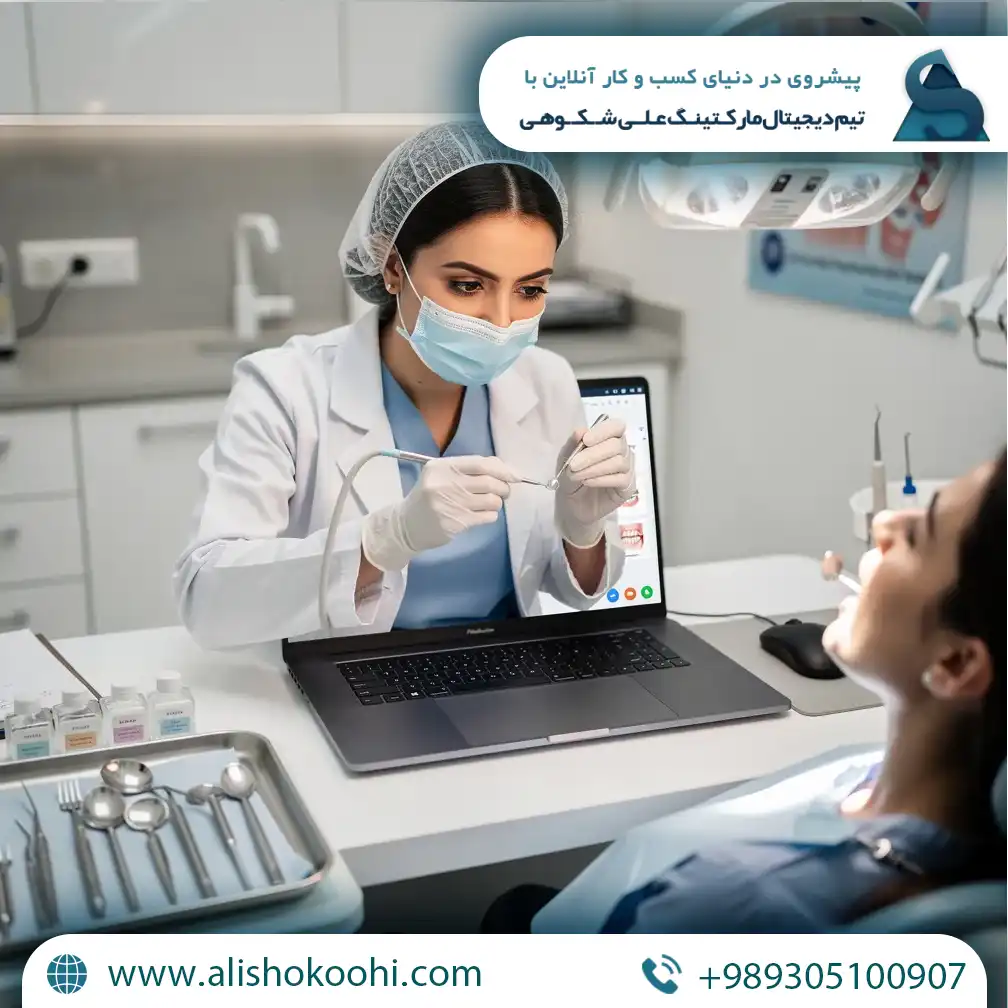
Why should you SEO your dental website?
- Being on the first page of Google and being seen by patients
- Attracting targeted traffic and converting visitors into real patients
- Becoming a scientific authority and a leading brand in the field of specialization.
- Reducing dependence on expensive advertising and traditional methods
- Increase patient trust by demonstrating expertise and credibility
- Overtaking competitors and capturing more market share
- Easier access for local patients to your clinic (Local SEO)
- Sustainable and long-term growth in the number of booked appointments
- Accurately introducing specialized services to people seeking treatment
- Improving user experience and increasing satisfaction of digital referrals
- Increasing clinic revenue by attracting higher quality patients
Human Content: When Expertise Wears the Clothes of Intimacy
Transforming complex concepts into simple stories
Imagine a patient coming to your site and seeing something like “reconstruction using cross-prosthesis and biocompatible materials.” They’d probably shut down right then and there. Why? Because the human brain runs away from complexity to survive. In dental SEO, we shouldn’t try to turn the patient into a dentist; we should present our expertise in a way that even a 10-year-old would understand.
What is the solution? Storytelling. Instead of writing “the benefits of implants in preventing jawbone resorption,” say: “Imagine being able to chew your favorite food with confidence again, without worrying about your teeth shifting.” The difference is that the first approach offers an explanation, while the second paints a picture.
When you explain complex concepts in simple stories and everyday examples, the patient feels like you understand them and want to guide them, not dictate them. This style of content not only increases your site’s conversion rate, but it also appeals to Google because users spend more time on your pages and read more enthusiastically. Your expertise is the engine that drives them, but your sincerity is the beautiful body that makes that engine tangible to the patient.
From “Resume” to “Personality” (Humanizing the Brand)
Most “About Us” sections on medical websites are a dry list of degrees, years of experience, and international certifications. Yes, those are important, but here’s the hard truth: patients trust “certificates,” but they trust “people.” The person who’s going to trust you doesn’t just want to know where you went to school; they want to know who you are.
Humanizing your brand in dental SEO means turning your resume into a “personality.” Instead of just writing “Gingival Surgeon,” write, “Years ago, when I was struggling with my own fear of the dentist, I decided to invent a way to ensure my patients never experienced that stress.” Or even mention what books you read in your free time or what your perspective on the concept of “smile” is.
When you reveal your human side, the patient is no longer dealing with a mere “job title” but is connecting with a “human being.” It is this emotional connection that leads a patient to choose you—even if your clinic is slightly farther away than a competitor’s—because they feel they know and trust you. Remember: your credentials prove your competence, but your personality builds patient loyalty.
Comments section: Converting “confirmation” to “certificate of trust”
Many doctors are afraid of negative reviews and try to delete them or close the comments section altogether. But this is a strategic mistake. A website with 100% positive reviews and full stars is “suspicious” in the eyes of the modern user. No business in the world is perfect, and the user knows this.
The real magic of SEO for a dental website is turning reviews into “certificates of trust.” Positive reviews are a testament to your expertise, but how you respond to negative reviews is a testament to your “ethics and responsibility.” When a patient writes, “I waited too long for my appointment,” and you respond with dignity and sincerity, “We’re so sorry that your time wasn’t managed properly; to make up for it, we’ve designed a system that will now let you know the exact time,” you’re showing all your site visitors that you’re a doctor who values patients and learns from your mistakes.
Smart feedback management means turning a small crisis into a brilliant opportunity to show humanity. When a patient sees you are humble and responsive to criticism, they feel safe. They know that if something goes wrong with their treatment, you won’t abandon them. This level of transparency is the most powerful persuasive tool that no amount of paid advertising can replace.
Final step:
We’ve found the patient, we’ve overcome their fear, we’ve convinced them, and we’ve built an emotional connection. Now it’s time to turn all of this into “money and revenue.” Are you ready to move on to the final chapter, Converting Visitors to Patients: Engineering Booking Buttons and Conversion Rate (CRO), to learn how to maximize your booking rates with a precise strategy?
Conversion Engineering (CRO): Turning Clicks into Filled Seats
Magnetic CTAs: Replacing Boring Buttons with Passionate Sentences
Let’s be honest; a button that says “Submit” or “Book an Appointment” is not appealing. These words reek of office forms and long hospital lines. While the patient is on your website looking for a “way to salvation”, not to fill out a form. In our dental SEO strategy, we need to turn call-to-action (CTA) buttons from a “command” to a “promise”.
A “magnetic button” is one that shows the patient the final result rather than the tedious process. Instead of “Book an implant appointment,” write: “The first step to restoring my smile.” Instead of “Submit request,” write: “Free consultation to say goodbye to pain.”
The difference between the two is in the psychology of “reward.” When a user clicks the “submit” button, they feel like they’re doing a clerical task; when they click “get my smile back,” they’re actually moving toward their dream. These small changes in wording will dramatically increase your conversion rate because you’re no longer asking the patient to take a turn, but instead offering them a change.
Eliminate “friction” in scheduling: Every extra click is a lost patient
In the digital world, “friction” is anything that slows a user down or makes them pause to think. Imagine a patient visiting your site while suffering from a severe toothache and stress; to book an appointment, they are confronted with a ten-field form asking for their postal code, ID number, and medical history. At that moment, friction whispers: “This is too much effort; maybe I’ll do it later.” And that “later” effectively means “never.”
In SEO optimization for a dental website, we need to turn the booking journey into a “slide”; one that takes the patient to their destination without any effort. Every extra field in the booking form is an opportunity for the patient to bounce off the site. The golden rule is: “The less you ask, the more bookings you get.”
Only capture the essential information (name and contact number) and leave the rest of the details for a phone call or in-person meeting. When you reduce the booking process from 5 steps to 2, you are essentially breaking down the patient barrier. Remember, patients have little patience in the moment of pain. Your website should be like a quick and smart assistant that says, “Just leave your number, we’ll take care of the rest.”
Empathetic Chatbots: Responding to Concerns at 2 AM
Many decisions to see a dentist are made at odd hours, like 2 a.m. when a toothache won’t let you sleep, or when someone is looking at old photos in the silence of the night, wishing for a prettier smile. At these times, your clinic is closed, your secretary is asleep, and the phones are unanswered. But your website is awake.
Using smart and empathetic chatbots in dental SEO means having an assistant who never sleeps. But be careful; we don’t mean a dry robot that gives general answers. We’re talking about chatbots that are designed with a human tone. A robot that, when a patient says “I’m so scared,” doesn’t respond with “Please take your turn,” but rather says: “I totally understand you, many of our patients felt the same way, but with our new methods, everything is easier than you think. Would you like to know how we reduce stress?”
These chatbots build a “bridge of trust” during hours when your competitors are completely silent. They address initial concerns, answer repetitive questions, and ultimately guide the patient to an appointment while they are still in “need” mode. This means turning them into a 24/7 patient acquisition machine.
We started with visual architecture, hunted through the SEO ocean, translated the expertise into human language, and finally engineered the conversion path. Now you don’t just have a website; you have a “patient acquisition system” that automatically builds your credibility and fills your clinic chairs.

In this final section, we’ll put all the pieces of the puzzle together so you have a step-by-step guide to conquering the digital market.
Summary and Action Plan
The Ultimate Checklist: From Design to Google Rank #1
To avoid getting lost on your dental SEO journey, you need a compass. This checklist is your action plan that you should check off each week. Divide this journey into three phases:
Phase One: Calm Infrastructure (First Month)
- Revising the site’s color palette (replacing cold white with soothing colors).
- Simplifying the appointment booking process (removing extra fields and reaching the reservation in less than 3 clicks).
- Transforming a dry resume into a human, story-like profile.
- Optimize site loading speed (because an anxious patient has no patience).
Phase Two: Conquering Searches (Months Two and Three)
- Identify keywords with “user intent” (focus on “need” words rather than general words).
- Google Business optimization and accurate clinic location registration for local SEO.
- Produce 10 articles on “Answers to Fears” (answers to questions patients ask at 2 a.m.).
- Transform image galleries into “before and after” stories with a focus on smiles and happiness.
Phase 3: Conversion Optimization (Month 4 onwards)
- Rewrite all CTA buttons (from “Submit” to “Tempting Promises”).
- Enabling an empathetic chatbot for 24-hour response.
- Collecting and strategically managing patient feedback (turning criticism into opportunity).
- Analyze user behavior with tools like Hotjar to eliminate friction points.
Final Word: SEO is not a sprint; it’s a marathon.
Let me share an honest truth with you: no SEO specialist who promises to get you to the number one spot in a week is being truthful. SEO for a dental website is like orthodontic treatment; you cannot straighten crooked teeth in a single session. This process requires patience, consistency, and precision.
Google, like a demanding patient, is looking for “credibility” and “consistency.” When you consistently produce human content, address patient fears, and improve the user experience, Google realizes that you’re not just a website, but an “authority.” High rankings are Google’s reward for “physicians committed to the patient experience.”
Many competitors see SEO as a cost and get frustrated and stop after a month of not ranking #1. This is exactly where you can get ahead. In the digital world, the winner is not the one who runs the fastest, but the one who “doesn’t stop.” SEO is a long-term investment; you’re planting today to keep your clinic’s chairs full for years without paying for advertising.
Changes start today.
You now face a crossroads. One path is the familiar route: relying on traditional advertising, waiting for word-of-mouth referrals, and accepting a limited number of patients. The second path is that of “digital transformation”—where your clinic evolves into a brand, you eliminate patient anxieties, and you become the top choice in your city for anyone seeking a beautiful smile.
The world has changed. Your patients are searching Google right now. They are looking for someone who not only has expertise, but who “gets” them. If you don’t start making these changes today, you are giving away thousands of opportunities (potential patients) every day to a competitor who has had the audacity to change.
You don’t need to change everything at once. Start with one small step today: maybe rewriting your booking button, or writing your first article about “fear of the dentist.” Don’t let your expertise be overshadowed by an old, lifeless website. Your expertise deserves to be seen.
Many dentists think of a website as just a “digital brochure” to say, “We have a website too.” But the truth is, in this day and age, your website is your greatest digital asset. A website that, if engineered properly, will fight for you every second—even when you’re in surgery or sleeping peacefully—building your credibility and filling your unit chairs.
The Golden Triangle of Lasting Smiles
Your success online is the result of a golden triangle:
1. Intelligent Design (Killing Fear):
When a patient enters a site that conveys a sense of relaxation and spa rather than a sterile and cold space, their defenses are broken in the first second. Proper design means transforming “dental anxiety” into “eagerness to smile.”
2. Powerful SEO (Visibility):
Your expertise is useless if it gets lost in the ocean of Google. Dental website SEO is the road that leads a patient right to the door of your clinic when they are desperate for pain or beauty. SEO means that when a patient searches, you are the first to rescue them.
3. Human content (persuasion):
It’s your content that turns dry medical jargon into life-changing stories. When you address a patient’s fears, you transform them from a “visitor” to a “loyal patient.”
When these three sides come together, you are no longer just a doctor; you become a “brand” that patients from every neighborhood come to with complete confidence to restore their smile.
It’s time to tie the world’s smile to your expertise!
If you’re tired of seeing less specialized competitors get more seats because of their stronger Google presence, it’s time for a change. We don’t just want to build you a website; we want to make your “smile architecture” known all over town. Your expertise deserves to be seen. Let’s build your reputation to world-class standards together.
With 10 years of experience and 150 successful projects in 8 countries and 3 continents, Ali Shokoohi’s team wants to be your digital arm. We know how to translate your delicate expertise in dentistry into a language that Google will love and patients will confidently choose you as the only logical choice for their smile.
We take care of all the complexities of the process, from technical coding and rigorous optimizations to producing human content that kills fear. All of this effort is for one purpose: to allow you to focus on the art of creating beautiful smiles and relieving patients of pain.
You are the master of healing and we are the master of being seen. Let’s combine these two strengths to make your clinic, not a choice, but a “destination.”
Contact us now and let us ignite your clinic’s growth engine. Your expertise deserves to shine at the top of Google results and be seen by anyone looking for a real change in their smile.
Together, let’s introduce your expertise to the world and fill your unit chairs with patients who have chosen you with complete confidence.