

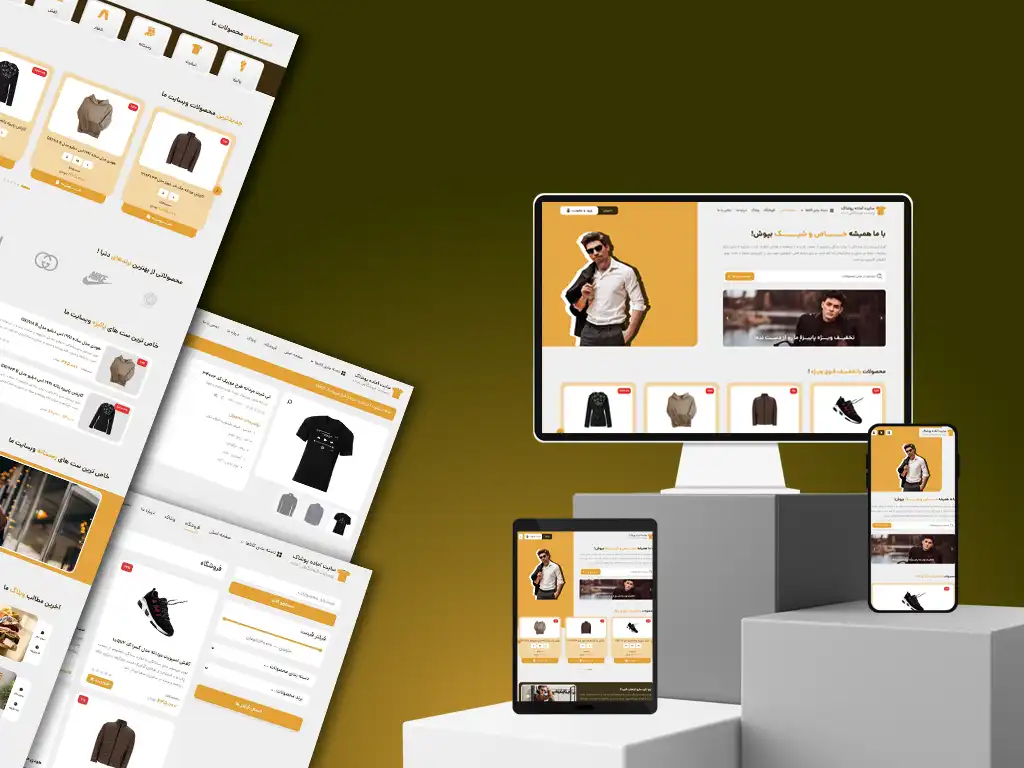
Clothing store website design
Why is clothing store website design necessary?
The storefront has migrated from the city streets to the screens of smartphones. Today, clothing store website design is no longer a luxury or an optional add-on; it is the beating heart of every successful business in the fashion and apparel industry. But why is this so essential?
1. A Storefront That Never Closes
A physical store has operating hours and is limited to a specific neighborhood or city. However, when you invest in a professional e-commerce website, you are essentially opening a branch that is open 24 hours a day, 7 days a week. Your customers can browse your collections and make purchases at any hour of the night, from the comfort of their own couch.
2. Expanding Your Market: From Local to Global
Fashion is highly subjective, and tastes vary wildly. While your immediate neighborhood might not have enough people who resonate with your specific style, the web gives you access to millions. An online store breaks geographical barriers, allowing your designs to be seen and purchased from one end of the country to the other—and even beyond international borders.
3. User Experience and Trust Building
Nowadays, customers research a brand before making a purchase. A sleek, fast, and user-friendly website sends a clear message of professionalism. Features such as:
- Accurate size guides
- High-quality image galleries
- Customer review systems These elements eliminate hesitation and build the trust necessary for customers to commit to an online payment.
4. Intelligent Management and Cost Reduction
An e-commerce platform automates inventory management, order registration, and shipment tracking. This means a reduced reliance on manual labor for answering repetitive questions and a significant decrease in human error during the ordering process.
Summary
If you want your clothing brand to evolve from a local business into a recognized name, a professional website is the bridge that connects you to the modern world of commerce. You aren’t just building a website; you are creating a seamless and enjoyable shopping experience for your customers.
What are the key features in designing a clothing store website?
When we talk about clothing store website design, it is not just about having a page to display garments; the goal is to create a “delightful shopping experience” that captivates the customer from the moment they land on the site until the final payment. To stand out among thousands of competitors, your site must offer features specifically tailored to the needs of fashion shoppers.
Below are the most critical features that are essential for a successful clothing store website:
1. Advanced and Intelligent Filtration System
A customer should not have to browse your entire catalog to find a “men’s blue cotton shirt in size XL.” Implementing precise filters based on size, color, fabric, price, and brand accelerates product discovery and significantly increases the conversion rate from visitor to buyer.
2. Interactive Size Guides
The biggest concern for online apparel shoppers is the fear that the clothes “won’t fit.” To solve this, your website design should include a detailed size chart or even an intelligent tool that suggests the ideal size based on the user’s height and weight. This minimizes the likelihood of product returns.
3. High-Resolution Galleries with Zoom and Video
In the fashion industry, the eyes make the decision. Utilizing high-quality images from multiple angles, a zoom feature to inspect fabric texture, and short clips of models wearing the clothes helps convey the tactile feel of the product to the customer.
4. Real-Time Inventory Management and Pre-orders
Nothing disappoints a customer more than ordering an item only to find out later that it is out of stock. The inventory management system must update in real-time. Additionally, for sold-out items, a “Notify Me When Available” option should be active to retain potential leads.
5. Secure Payment Gateways and Diverse Shipping Options
Simplicity in payment and a variety of shipping methods (standard mail, express courier, or in-store pickup) ensure that customers can finalize their purchases without stress.
Summary
A successful clothing store website is a fusion of visual aesthetics and technical efficiency. If your website can replicate the atmosphere of a luxury boutique in a digital environment, customers will not only buy once—they will return to you time and time again.
How does clothing store website design help generate revenue?
When we talk about clothing store website design, it is not just about having a page to display garments; the goal is to create a “delightful shopping experience” that captivates the customer from the moment they land on the site until the final payment. To stand out among thousands of competitors, your site must offer features specifically tailored to the needs of fashion shoppers.
Below are the most critical features that are essential for a successful clothing store website:
1. Advanced and Intelligent Filtration System
A customer should not have to browse your entire catalog to find a “men’s blue cotton shirt in size XL.” Implementing precise filters based on size, color, fabric, price, and brand accelerates product discovery and significantly increases the conversion rate from visitor to buyer.
2. Interactive Size Guides
The biggest concern for online apparel shoppers is the fear that the clothes “won’t fit.” To solve this, your website design should include a detailed size chart or even an intelligent tool that suggests the ideal size based on the user’s height and weight. This minimizes the likelihood of product returns.
3. High-Resolution Galleries with Zoom and Video
In the fashion industry, the eyes make the decision. Utilizing high-quality images from multiple angles, a zoom feature to inspect fabric texture, and short clips of models wearing the clothes helps convey the tactile feel of the product to the customer.
4. Real-Time Inventory Management and Pre-orders
Nothing disappoints a customer more than ordering an item only to find out later that it is out of stock. The inventory management system must update in real-time. Additionally, for sold-out items, a “Notify Me When Available” option should be active to retain potential leads.
5. Secure Payment Gateways and Diverse Shipping Options
Simplicity in payment and a variety of shipping methods (standard mail, express courier, or in-store pickup) ensure that customers can finalize their purchases without stress.
Summary
A successful clothing store website is a fusion of visual aesthetics and technical efficiency. If your website can replicate the atmosphere of a luxury boutique in a digital environment, customers will not only buy once—they will return to you time and time again.
Other benefits of designing a clothing store website...
We have already seen how an e-commerce site increases revenue and expands market reach, but the advantages of clothing store website design do not stop there. Beyond money and sales, there are strategic benefits that, in the long run, solidify your market position and transform your business from a “simple shop” into a “prestigious brand.”
Let’s explore these “golden,” often overlooked advantages of professional clothing store website design:
1. Building Authority and Brand Image (Branding)
In today’s digital age, if a potential customer searches for your name on Google and doesn’t find a professional website, they instinctively lose confidence in the quality of your products. A well-designed website allows you to tell your brand’s story, showcase your core values, and—through a cohesive visual identity—be recognized by customers as a true expert in the world of fashion.
2. Customer Loyalty through Reward Systems
In a physical store, it is difficult to track and reward your most loyal customers. On a website, however, you can implement “exclusive discounts,” “customer loyalty clubs,” and “birthday promo codes.” This level of personalization makes the customer feel valued and seen, drastically increasing the likelihood of repeat purchases.
3. Streamlined Feedback and Product Optimization
The reviews section in a professional clothing store website acts as a free and honest consultant. When customers comment on fabric quality or the fit of a garment, you receive immediate, actionable data on where to make improvements. This rapid feedback loop enhances your product quality and guarantees higher customer satisfaction.
4. Agility and Alignment with Fast Fashion Trends
The fashion industry changes in the blink of an eye. With a website, you can swap your winter collection for a spring launch in seconds or deploy a striking banner for a holiday sale instantly. This flexibility—inherent in modern website design—allows you to move at the same speed as the global fashion world.
Final Thought
Ultimately, clothing store website design is a tool for taking full control of your business—from managing your brand image to establishing a direct line of communication with your customers. You are no longer dependent on environmental factors; you have built your own digital empire.
Main page:
Your own page
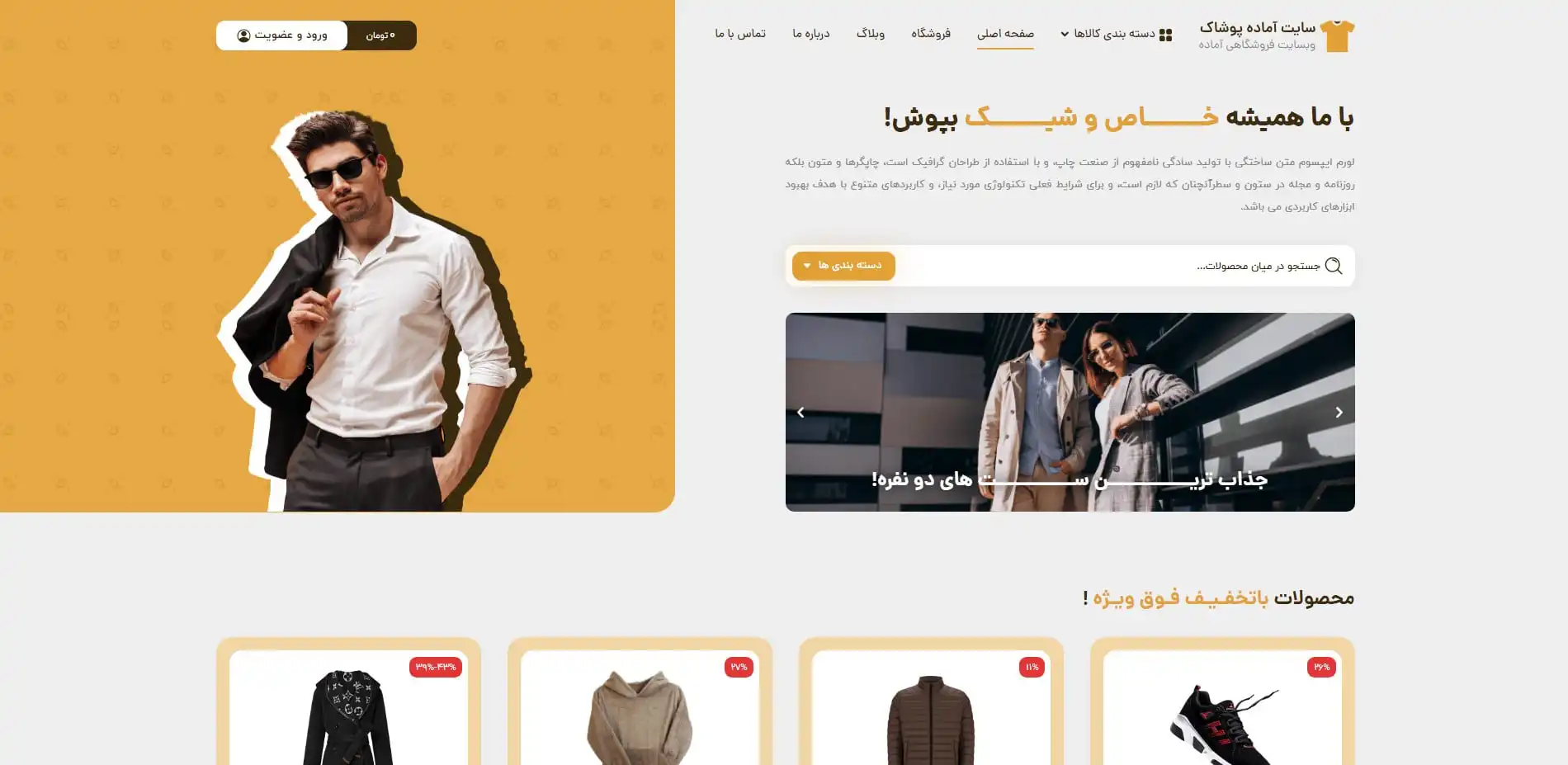
The Home Page is essentially the “first paragraph” of your brand’s story. It is where a customer decides—within a matter of seconds—whether to stay and shop or hit the exit button. In clothing store website design, the home page should not be a mere list of garments; it must act as an intelligent, alluring guide that leads the user deeper into the site.
To ensure your home page achieves a high conversion rate, you must creatively implement these key sections:
1. Captivating Hero Banners (The Hero Section)
The first thing a user sees is the top banner. This is where you sell an “emotion,” not just a product. By using high-resolution imagery from your latest collection, paired with a compelling headline (e.g., “Curate Your Summer Style”) and a clear Call-to-Action (CTA) button like “Explore New Arrivals,” you immediately immerse the user in the shopping experience.
2. Visual and Rapid Categorization
Customers should not have to wander through complex menus to find “Women’s Wear” or “Accessories.” In professional clothing store design, using intuitive icons or small circular imagery for main categories on the home page shortens the user journey and makes navigation a pleasure.
3. “Best Sellers” and “Special Offers” Sections
Social proof is a powerful motivator; we all want to know what others are buying. Displaying popular products or flash sales on the home page creates a sense of “Fear Of Missing Out” (FOMO), encouraging the customer to make a purchase decision more quickly.
4. The “New Arrivals” Showcase
The essence of the fashion industry is staying current. Having a dedicated section for newly arrived products signals to your recurring customers that every visit to your site will offer something fresh and exciting.
5. Trust-Building Elements (Guarantees and Testimonials)
Displaying secure payment gateway logos, electronic trust symbols (certificates), and a few brief quotes from satisfied customers at the bottom of the home page unravels any lingering doubts. It assures the shopper that they are dealing with a reputable and credible brand.
Summary
A successful home page in clothing store website design is a perfect balance between “visual aesthetics” and “navigational simplicity.” The ultimate goal is to ensure the user reaches their desired product in the shortest time possible, without a hint of confusion.
بخش فروشگاه :
Main section of the store page
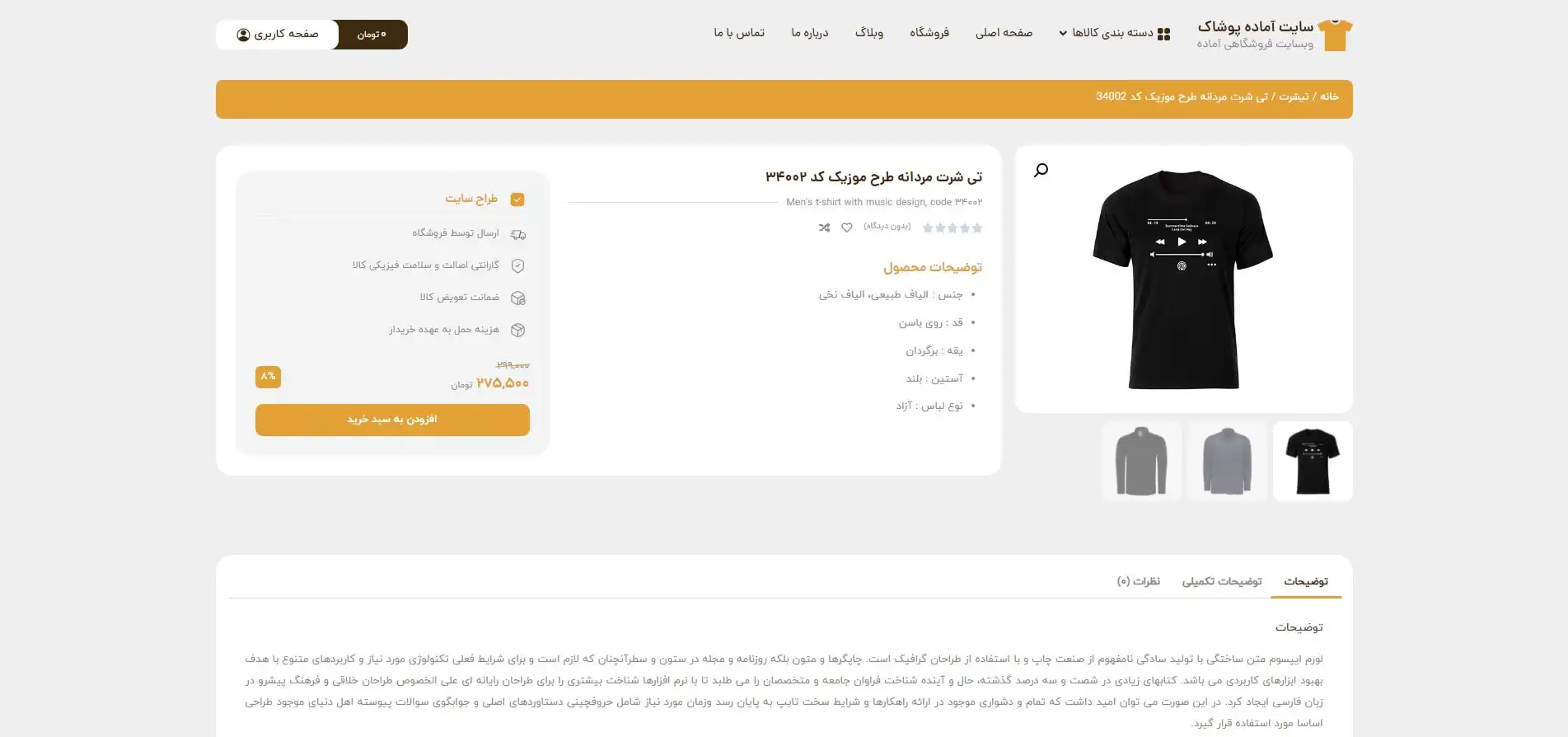
Main section of the store page
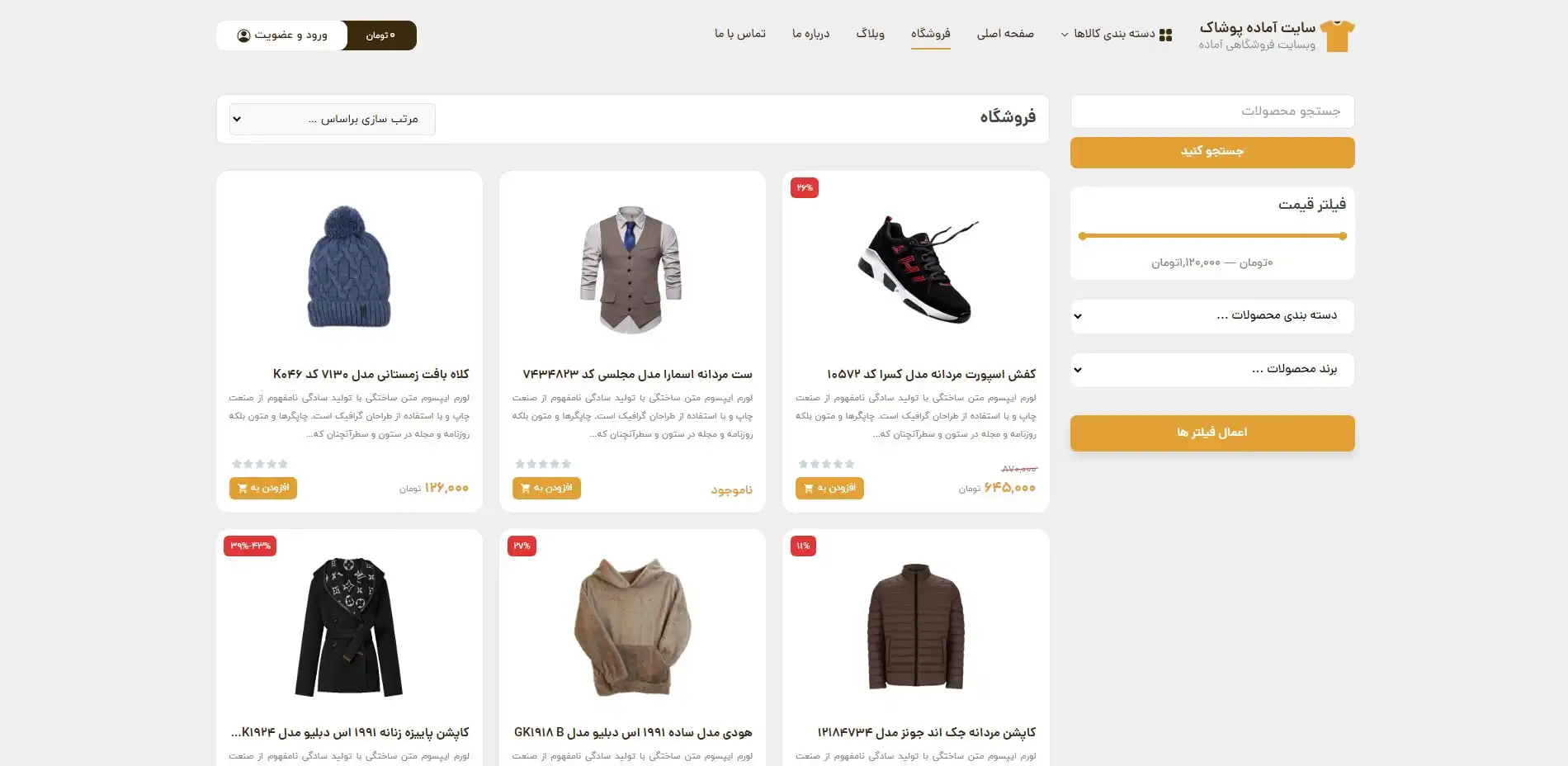
If the Home Page is your storefront, the Shop Page is your main showroom, and the Product Page is the fitting room—the place where the customer examines the details and makes the final decision. In clothing store website design, these two pages are the primary engines of sales; even a minor flaw here can cause a customer to abandon their purchase just one step away from the finish line.
Let’s examine the essential features these two sections must have to drive conversions:
1. The Shop Page: The Art of Organization
The goal of this page is to allow the user to browse your catalog without feeling overwhelmed or fatigued.
- Intelligent Filters: The ability to quickly narrow down products by color, size, price, and brand.
- Quick View: A feature that allows users to get a snapshot of a garment’s details and available sizes without leaving the main shop page.
- Flexible Layouts: The option to toggle between “Grid View” and “List View,” letting users shop according to their preference.
- Advanced Sorting: The ability to organize products by “Newest,” “Price: Low to High,” or “Highest Rated.”
2. The Product Page: The Art of Persuasion
This is the moment where you must resolve every single doubt the customer may have.
- Interactive Image Galleries: High-resolution photos from multiple angles with a zoom feature to inspect the fabric’s texture.
- Visual Color Swatches: Instead of a boring dropdown menu, display colors as clickable circles so the user can instantly see the garment in a different hue.
- Precise Size Guides: A dedicated link or pop-up that clearly explains which size corresponds to specific height and weight measurements.
- Emotional and Technical Descriptions: Beyond just mentioning the fabric type and washing instructions, use evocative language that conveys the feeling of wearing the piece (e.g., “Perfect for formal evenings and exclusive gala events”).
- Complementary Suggestions (Cross-selling): A section titled “Style this with these accessories,” which intelligently increases the average order value.
Summary
In clothing store website design, the shorter and more appealing the path from the Shop Page to the “Add to Cart” button, the higher your revenue will be. The goal is to transform a simple visit into a seamless, delightful shopping experience.
Blog (news and articles)
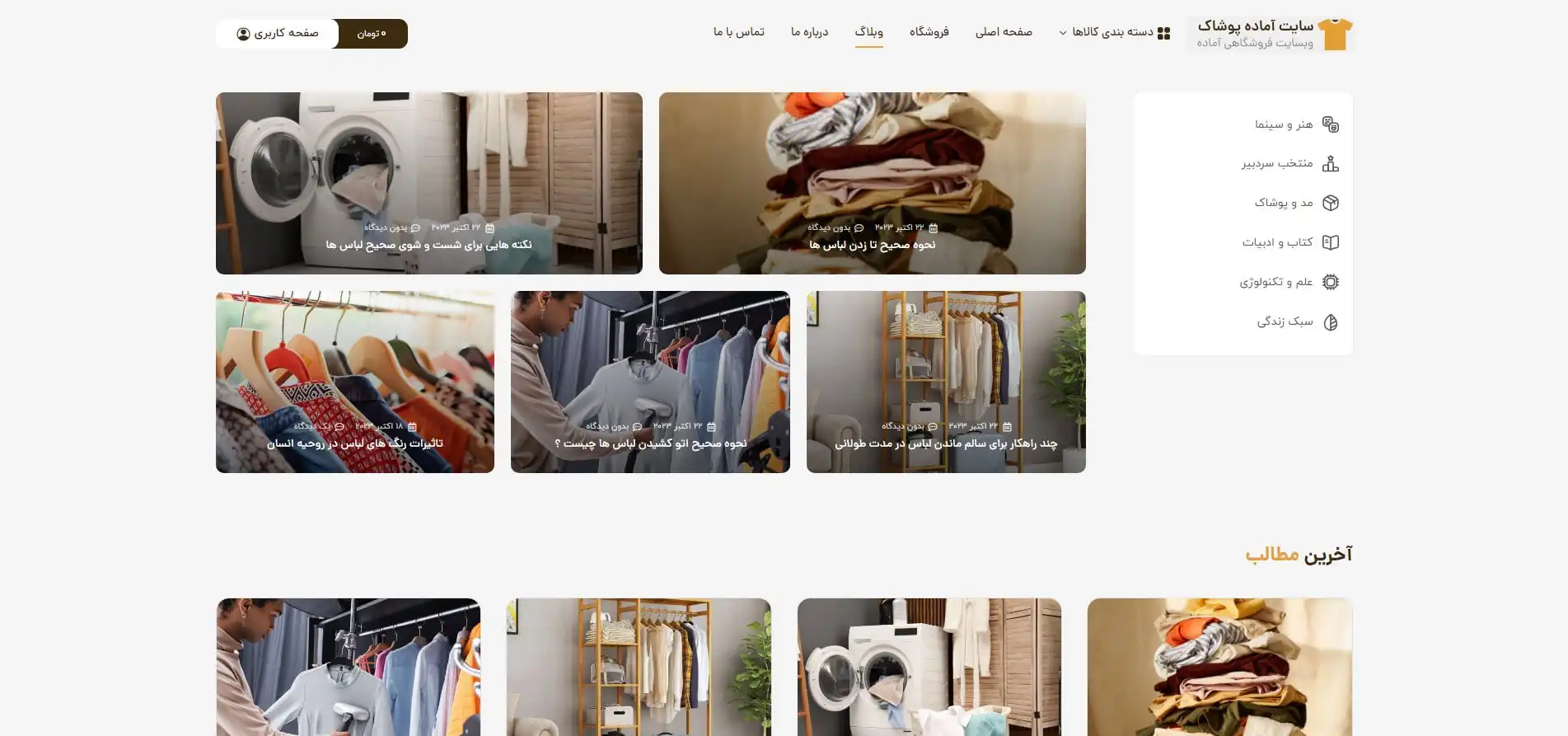
Professional article classification
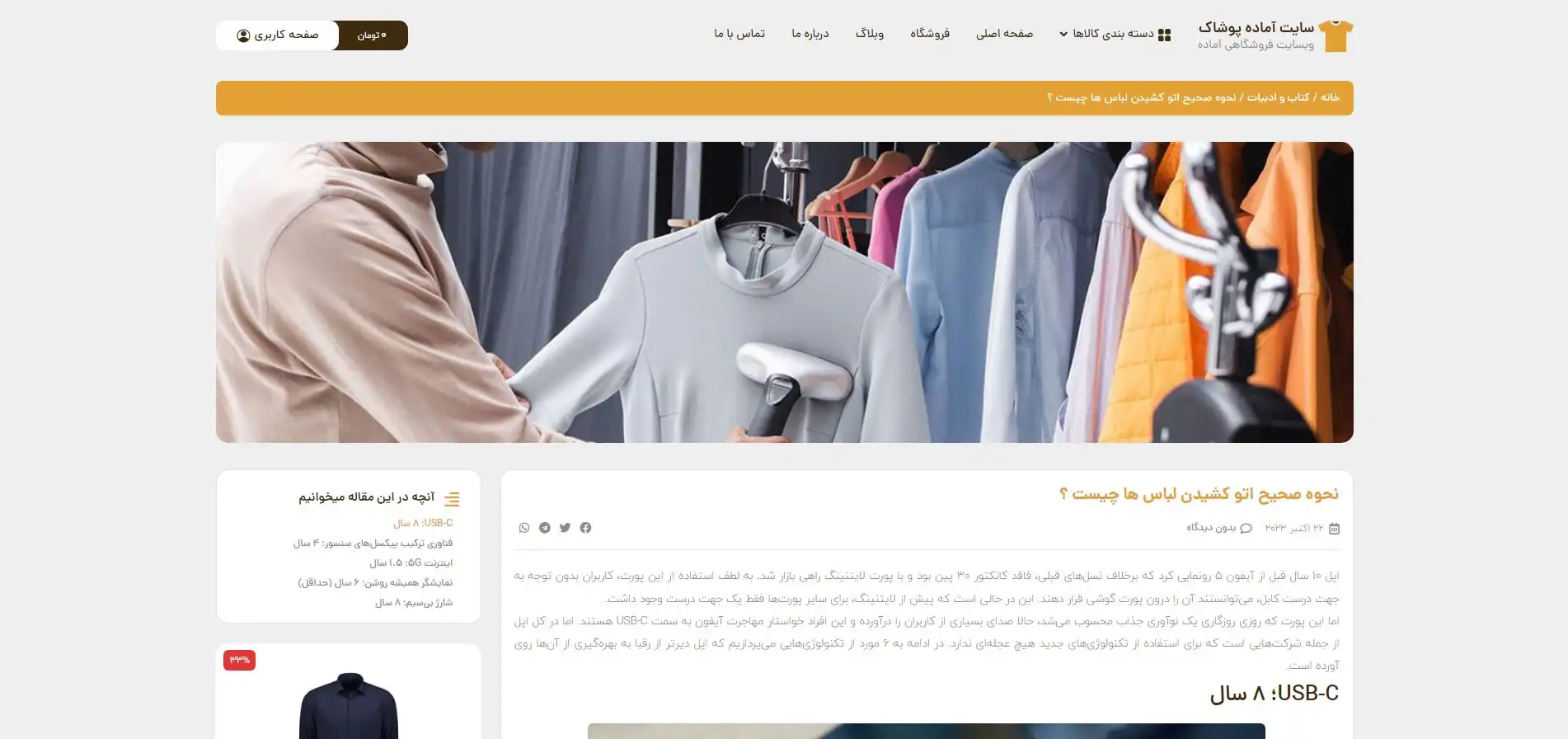
Professional article classification
At first glance, it might seem that a blog is an unnecessary addition to a clothing store. However, the truth is that in clothing store website design, the blog acts as the “Fashion and Style Consultant.” It attracts customers and convinces them to choose you based on your expertise, rather than just the price of your products.
A blog is essentially a bridge between a “user’s Google search” and “your website’s shopping cart.” For your blog to deliver maximum ROI within your clothing store design, it should incorporate the following elements:
1. Captivating Content Hubs (Topic Clusters)
Instead of publishing scattered articles, organize your content into strategic hubs. Create sections such as “The Ultimate Styling Guide,” “2024 Fashion Trends,” “Fabric Care Tips,” or “Occasion-Based Outfit Ideas.” This structure encourages users to spend more time on your site and signals to Google that you are an authoritative reference in the fashion industry.
2. Shoppable Content (Integrating Products into Articles)
This is the most intelligent aspect of professional clothing store design. Imagine writing an article titled “5 Chic Outfits for the Workplace.” At the end of each suggested look, embed direct purchase links for those exact garments. In doing so, you transition the user from a “reading state” to a “buying state” seamlessly, without it feeling like a forced advertisement.
3. Interactive and Visual Capabilities
Fashion is a visual language. Your blog should leverage these tools:
- Comparison Galleries (Before & After): For example, showing the difference between a poorly styled outfit and a professionally curated one.
- Size and Color Infographics: To simplify complex fashion concepts for the average user.
- Q&A and Comment Sections: A space where users can ask about their specific style dilemmas and receive expert advice from you.
4. SEO Optimization for Organic Traffic
Many users start their journey by searching for queries like “Which colors suit olive skin tones?” before they even decide what to buy. By producing targeted content, you capture these users at the very beginning of their buying journey and guide them toward becoming your customers.
Summary
A blog in clothing store website design is a tool for evolving from a “seller” into a “thought leader” in the fashion world. When you teach your customers how to look and feel their best, they will trust you implicitly with their wardrobe choices.
Body pages (About Us, Contact Us, and FAQs)
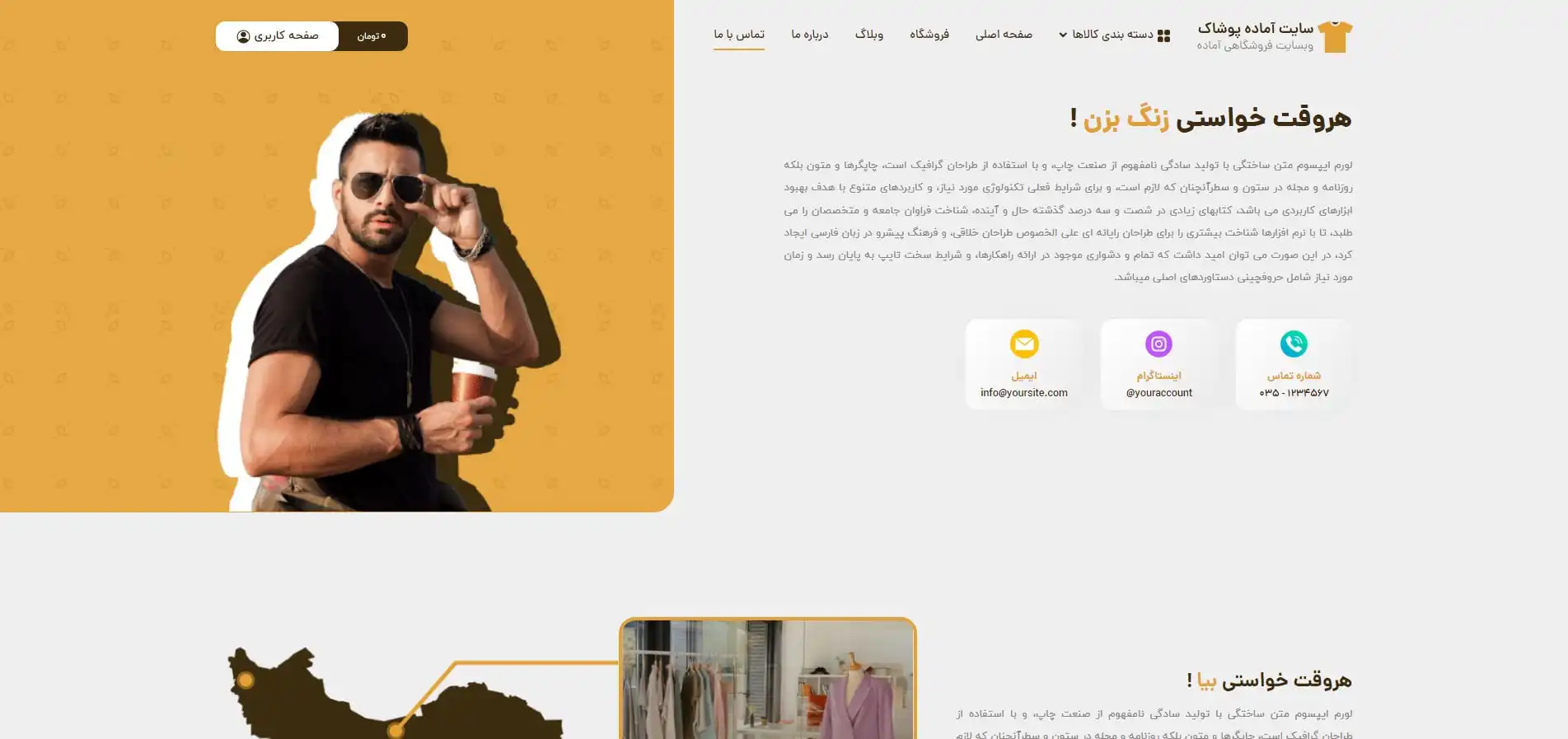
Minimalist and user-friendly About Us page
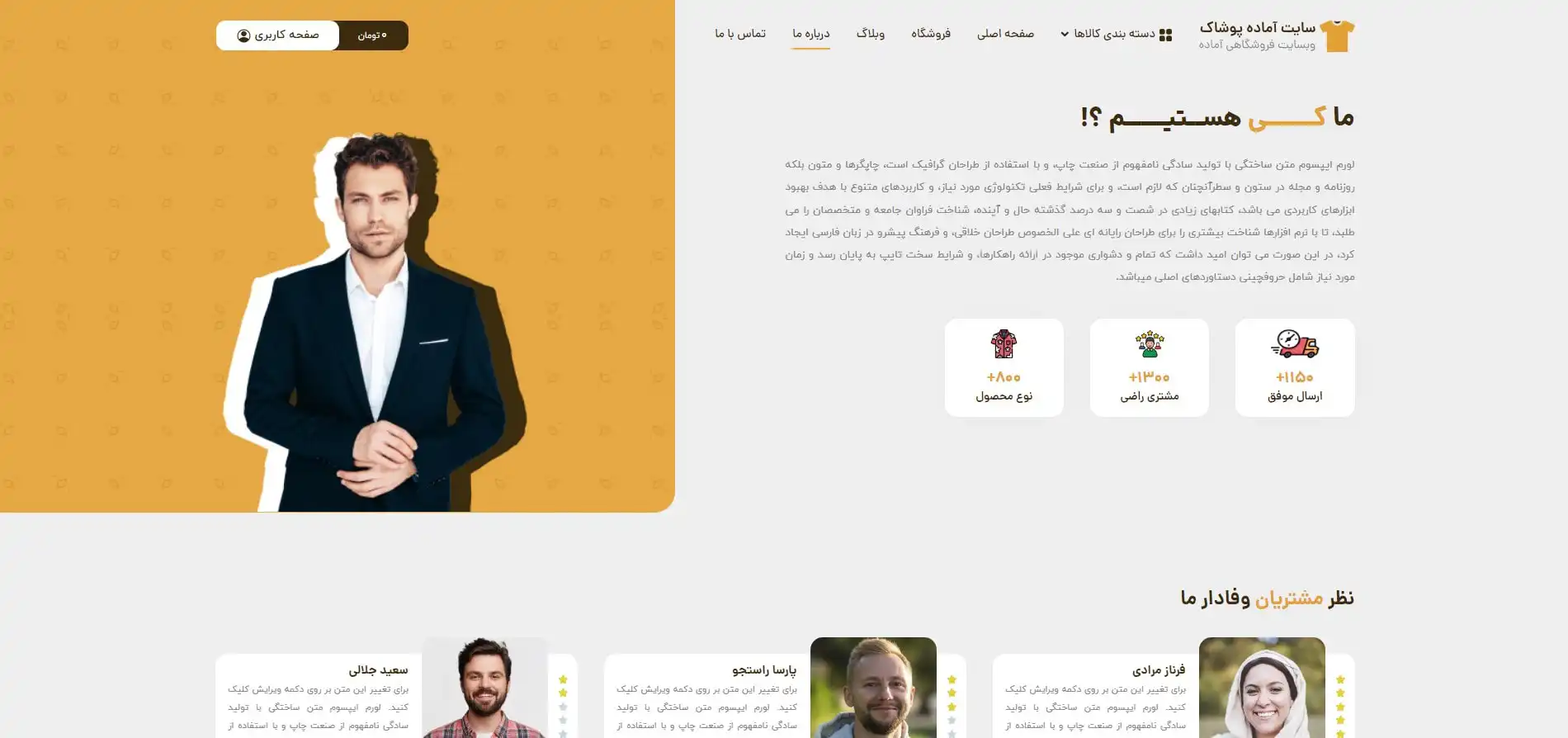
If the Home Page and Blog are the heart and soul of your website, the static pages—such as About Us, Contact Us, and Terms & Conditions—are the “skeleton and credibility” of your business. While these pages may receive fewer visits, they play a critical role during the most sensitive moment: when a customer is deciding whether or not to trust you with their money. In clothing store website design, these pages should not be dry or overly corporate; instead, they should use a human tone to convey warmth and reliability.
Let’s look at the essential features these pages must have to build unwavering trust:
1. The “About Us” Page: Narrating Your Brand Story
This is where you transform from a nameless “store” into a “human.” Avoid clichés and tell your real story: Why did you enter the world of fashion? What unique value do you bring to your customers? In professional clothing store design, including photos of your team or your workspace significantly elevates the level of trust and authenticity.
2. The “Contact Us” Page: The Rapid Communication Bridge
A customer needs to know exactly where you are and how to reach you if a problem arises.
- Quick Contact Form: For sending brief messages without leaving the site.
- Google Maps Integration: If you have a physical boutique, showing your exact location proves your business is real and tangible.
- Social Media Links: For real-time communication and allowing customers to see your daily updates and stories.
3. “Terms & Conditions”: Transparency as the Secret to Trust
In online apparel retail, the primary anxieties are “Size” and “Fabric Quality.” In this section of your clothing store design, you must focus on absolute clarity regarding:
- Return and Exchange Policies: State clearly and simply what happens if the garment doesn’t fit or meet expectations.
- Shipping and Delivery Terms: Provide precise delivery timelines and transparent shipping costs.
4. The “FAQ” Page: Reducing Support Friction
Answering repetitive questions—such as “How do I find my size?” or “Is shipping free over a certain amount?”—improves the user experience and drastically reduces the volume of repetitive inquiries hitting your support team.
Summary
In clothing store website design, these pages act as your “Trust Insurance.” When a customer sees that you have invested time into the details, the rules, and the channels of communication, they will click the “Payment” button with far more confidence and peace of mind.
Other features of clothing store website design
- Responsive design
- Direct banking portal
- Receive the National Trust Symbol
- Possibility to insert bilingual content
- Ability to define brand and category pages
- Smart inventory and warehouse management
- SEO Base (ability to get rank 1 on Google)
- Unlimited capabilities (number of brands, categories, labels, etc.)