

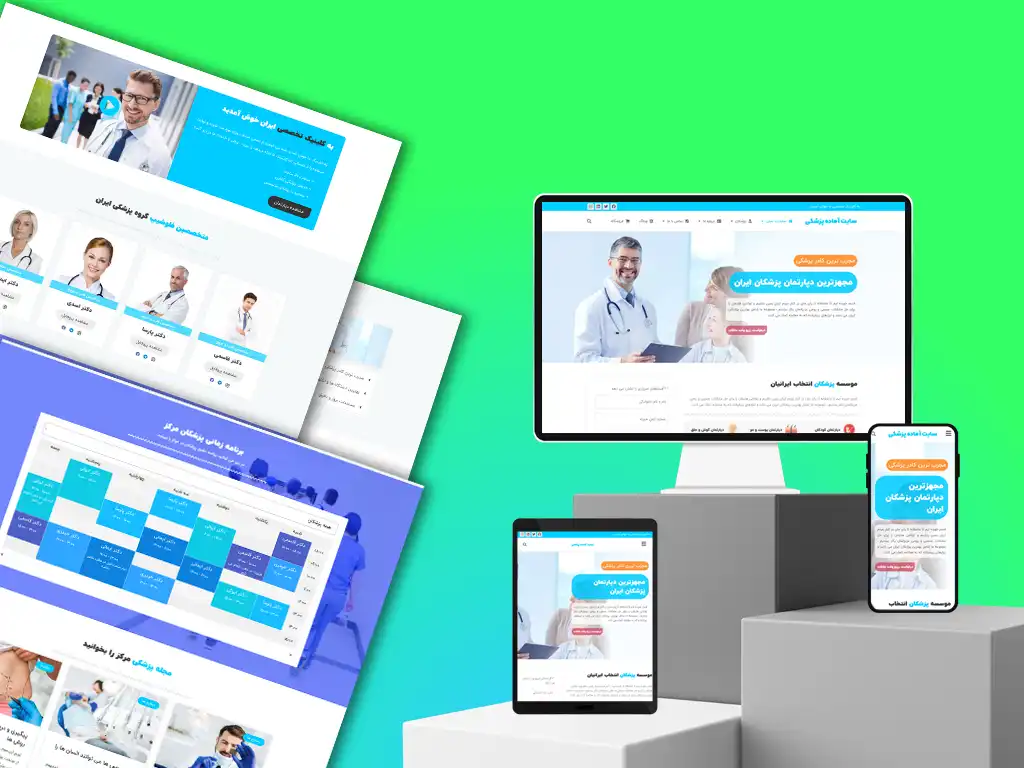
Medical Department website design with online appointment booking
Why is website design for the medical department necessary?
Medical clinic website design with online appointment booking (such as a clinic, medical group, or hospital ward) is essential and vital in many ways. In today’s world, having a professional online presence is not only an advantage, but also a basic requirement for providing effective services and gaining public trust.
1. Increase Credibility
Professional Presence: A well-designed website with accurate content makes your department appear credible and professional.
Official Information Source: This site acts as an official reference for information about the department, doctors, specialties, and services, preventing the spread of misinformation.
Display of Licenses: The ability to officially display the department’s licenses, approvals, and honors, which greatly helps build trust.
2. Accessibility
24/7 accessibility: Patients and clients can access vital information (e.g. address, business hours, emergency contact numbers) 24/7.
Service provision: Detailed information about healthcare services, covered diseases, and treatment methods can be provided.
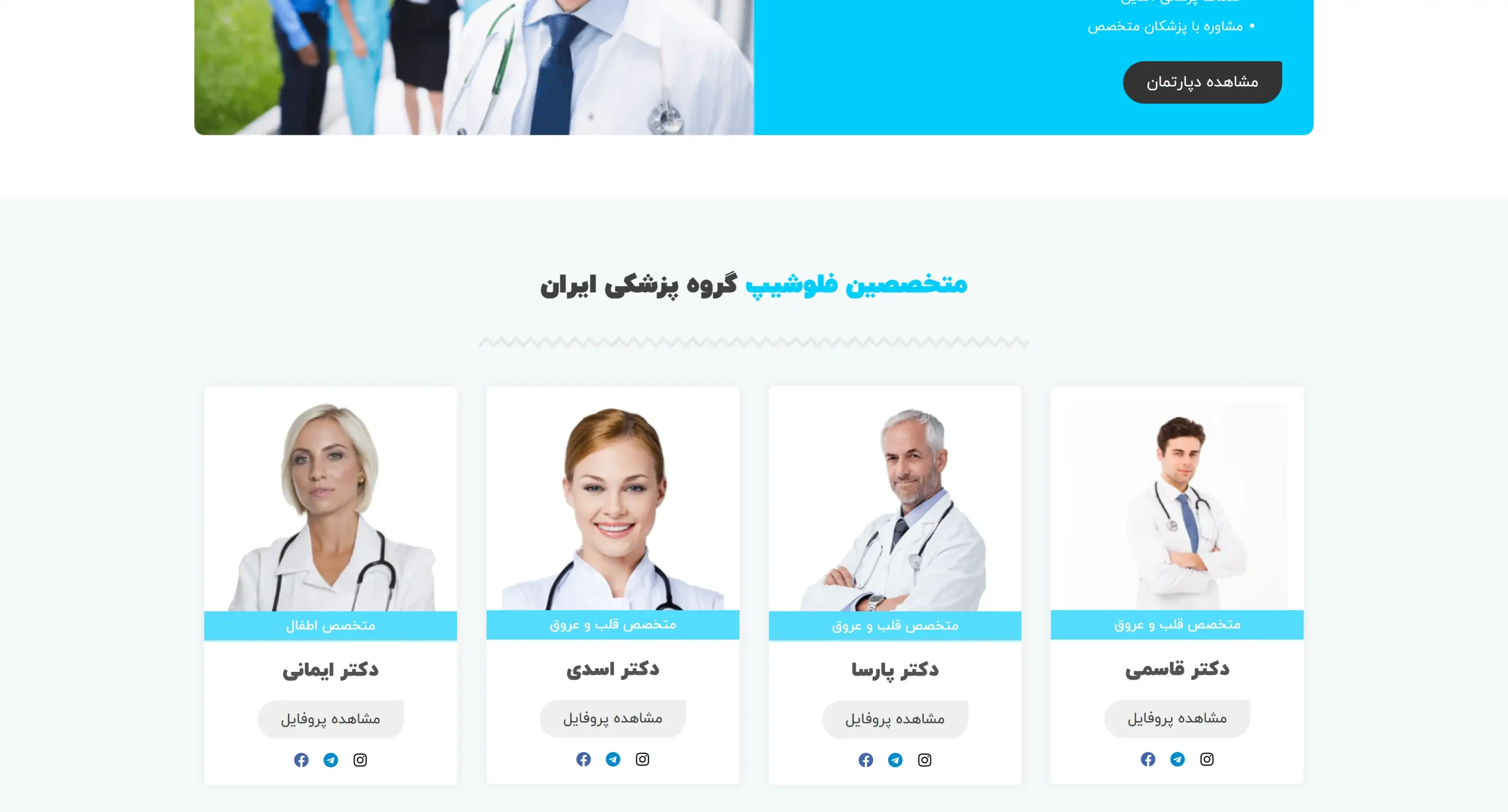
Physician information: Complete introduction of physicians, including specialties, educational background, resume, and hours of operation, which helps patients make informed choices.
3. Appointment management and communication (Efficiency)
Online appointment system: This feature is the most important benefit for patients and staff. Patients can make appointments without calling, and staff are relieved of the workload associated with answering calls.
Frequently asked questions (FAQ): The FAQ section greatly reduces the burden of daily calls.
Admission Forms: Ability to complete initial admission forms online, which saves time for the patient and the department during the visit.
4. Marketing
Search Engine Visibility (SEO): With strong SEO, when someone in your area searches for a specific medical specialty (e.g., “Tehran Heart Specialist”), your website will be displayed in the search results.
Blog and Educational Content: Publishing health-related articles and educational content not only educates the public, but also increases website traffic and introduces the department as a scientific reference.
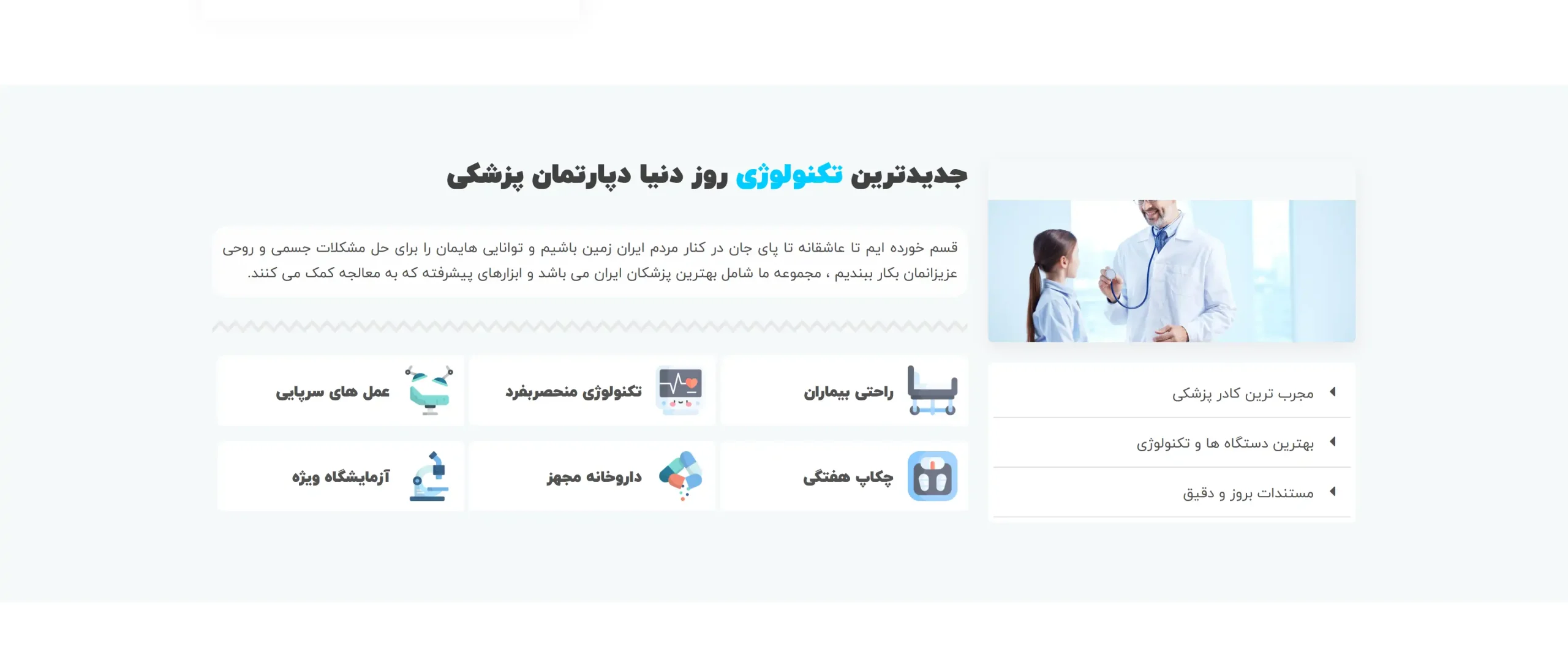
Introducing Equipment and Technology: Displaying the latest equipment and technologies used in the department, which is a competitive advantage.
5. Providing Modern Services
Electronic Patient Record (EHR/PHR): When integrated with internal systems, patients can securely view part of their medical record, test results, or post-operative instructions.
Telemedicine: A website can be a platform for providing online (video or text) consultation services.
What are the key features in designing a medical department website?
To be successful and gain trust, a medical department website with online appointment booking must go beyond a simple catalog. The key features of these sites should focus on user convenience, data security, and quick access to vital services.
Below are the most important and vital features that should be included in the design of a medical department website:
1. Online Appointment Management
High priority: This is the most important feature. Patients should be able to make, change, or cancel their appointments 24 hours a day.
Doctor Calendar Display: View each doctor’s free and full hours in real-time.
Automatic Confirmation: Send confirmation and appointment reminders (via email or SMS) to the patient.
Specialty Filter: Ability to search and filter appointments based on specialty, doctor’s name, or type of service.
2. Comprehensive introduction of doctors and treatment team
Detailed profiles: Dedicated page for each doctor including:
Specialties and subspecialties.
Resume, academic records and international credentials.
Hours of operation and active clinics.
Specialties: A clear explanation of the types of medical services the department provides (e.g. orthopedics, cardiology, obstetrics and gynecology).
3. Security & Privacy
Compliance with standards: Ensure compliance with health data security standards (such as GDPR or HIPAA internationally).
SSL/TLS encryption: Use strong encryption protocols to protect all communications (site URLs must start with https://).
Strong authentication: Use secure login systems for patients to access their records.
4. Patient Portal
Secure access: Create a secure user panel for each patient.
Test results: Ability to view and download laboratory, radiology and diagnostic results online.
Treatment history: Access to appointment history, prescribed medications and post-operative instructions.
Admission forms: Ability to complete and submit medical history forms before visiting, to reduce waiting times.
5. Contact and access information
Clear information: Clearly display the full address, essential contact numbers, and email address.
Interactive map: Use Google Maps or other maps to accurately display the department’s location and access routes.
Business hours: Accurately display the working hours of different departments (emergency, laboratory, appointment) in an up-to-date manner.
6. Responsive design
Mobile compatibility: The site should be fully compatible with smartphones and tablets. Many users look for appointments via mobile.
High loading speed: Optimize the site’s images and codes for the highest loading speed, which is crucial for the user experience and site SEO.
7. Educational content and blog (Educational Content)
Health articles: Publish reliable and up-to-date medical content that helps improve the scientific standing and SEO of the site.
Health Announcements: News section to inform about vaccination schedules, seasonal recommendations or departmental changes.
Introducing new services: Explanations about new equipment or advanced treatments offered by the department.
How does medical department website design help generate revenue?
A medical department website is not only an information tool, but also a powerful revenue generator that can help your department grow financially and increase its profitability in several ways.
Here are the most important ways a professional website helps your medical department generate direct and indirect revenue:
1. New Patient Acquisition
SEO Impact: When your site is optimized for keywords related to your specialty (e.g., “Best Orthopedic Surgeon in [City Name]”), your department will rank at the top of Google search results. This will drive patients directly to you without the need for expensive traditional advertising.
Content Marketing: Authoritative and specialized medical articles (blogs) will establish you as a scholarly authority. People who come to your site searching for symptoms or specific treatments are more likely to eventually become your patients.
2. Optimizing the appointment process (Optimizing Conversions)
Reducing patient “flight”: Telephone appointments are often associated with busy lines, waiting times and the need to call during office hours. A 24/7 online appointment system removes these barriers and prevents patients from having to go to another clinic due to difficulty in calling. (Increase visitor-to-appointment conversion rate)
Upselling advanced services: On the site, you can clearly introduce services with higher profit margins (such as specialized surgeries, comprehensive check-ups or beauty services). By providing complete descriptions and attractive images, more patients are encouraged to use these services.
3. Reducing Operational Costs (Reducing Operational Costs)
Reducing administrative costs: An appointment system and frequently asked questions (FAQ) greatly reduce the workload and the need to hire multiple staff to answer the phone and the office.
Communication Automation: Automatic appointment reminders via the site (email/SMS) reduce patients’ no-show rate and ensure that the doctor’s time is not wasted.
Reduction in Printing and Paperwork: Transferring admission forms, test results and post-operative instructions to the online user panel eliminates the costs of printing, storage and physical archiving.
4. Patient Retention and Loyalty
Excellent User Experience: When patients can easily see their test results, change their appointments and communicate securely with their doctor, their loyalty to the department increases and they will choose you for future visits.
Health Education Section: Providing relevant and useful content helps patients better manage their health. This ongoing interaction (even when the patient does not currently need to see a doctor) ensures that your department always remains the first choice in their mind.
5. New Revenue Streams
Telemedicine Services: The website can provide the infrastructure to offer paid video or online consultations with doctors, which is a new and complementary revenue stream.
Sell related products: If possible, selling products such as certified supplements, books, or assistive devices in a small online store can help generate revenue.
Other benefits of designing a medical department website...
In addition to the main benefits of generating revenue, credibility, and easy scheduling, designing a website for a medical department has other complementary and important benefits that help improve the overall performance and image of the department:
1. Increased educational and research credibility
Research display: The site can serve as a platform to showcase ongoing research projects, published articles, and academic contributions of the department’s physicians.
Course and workshop information: If the department hosts educational courses, conferences, or specialized workshops, the site is the best place to inform, register, and sell tickets to these events. These activities increase academic credibility and side income.
2. Crisis management and rapid information
Emergency preparedness: In health crises (such as disease outbreaks, natural disasters, or sudden changes in health policies), the site allows for the immediate and widespread dissemination of official announcements so that the public is informed of accurate and up-to-date information.
Fast and reliable: The site is the fastest and most reliable channel to correct rumors or provide new instructions to patients.
3. Improving patient experience and satisfaction
Feedback and surveys: Tools can be included on the site to record patient comments, criticisms and suggestions (feedback). This data is vital to identifying weaknesses and improving the quality of services.
Financial and insurance resources: Providing complete information about insurance contracts, discounts and available financial assistance methods reduces financial uncertainty for patients and improves the experience of clients.
4. Facilitating organizational collaboration
Referral Portal: Create a secure section for general practitioners or other departments to easily and securely record and track patient referrals. This facilitates collaboration with other healthcare centers.
Recruitment: The site acts as a powerful tool for attracting new talent (doctors, nurses and staff). By showcasing your organizational culture, facilities, and career opportunities, more professionals will be willing to work with you.
Home page:
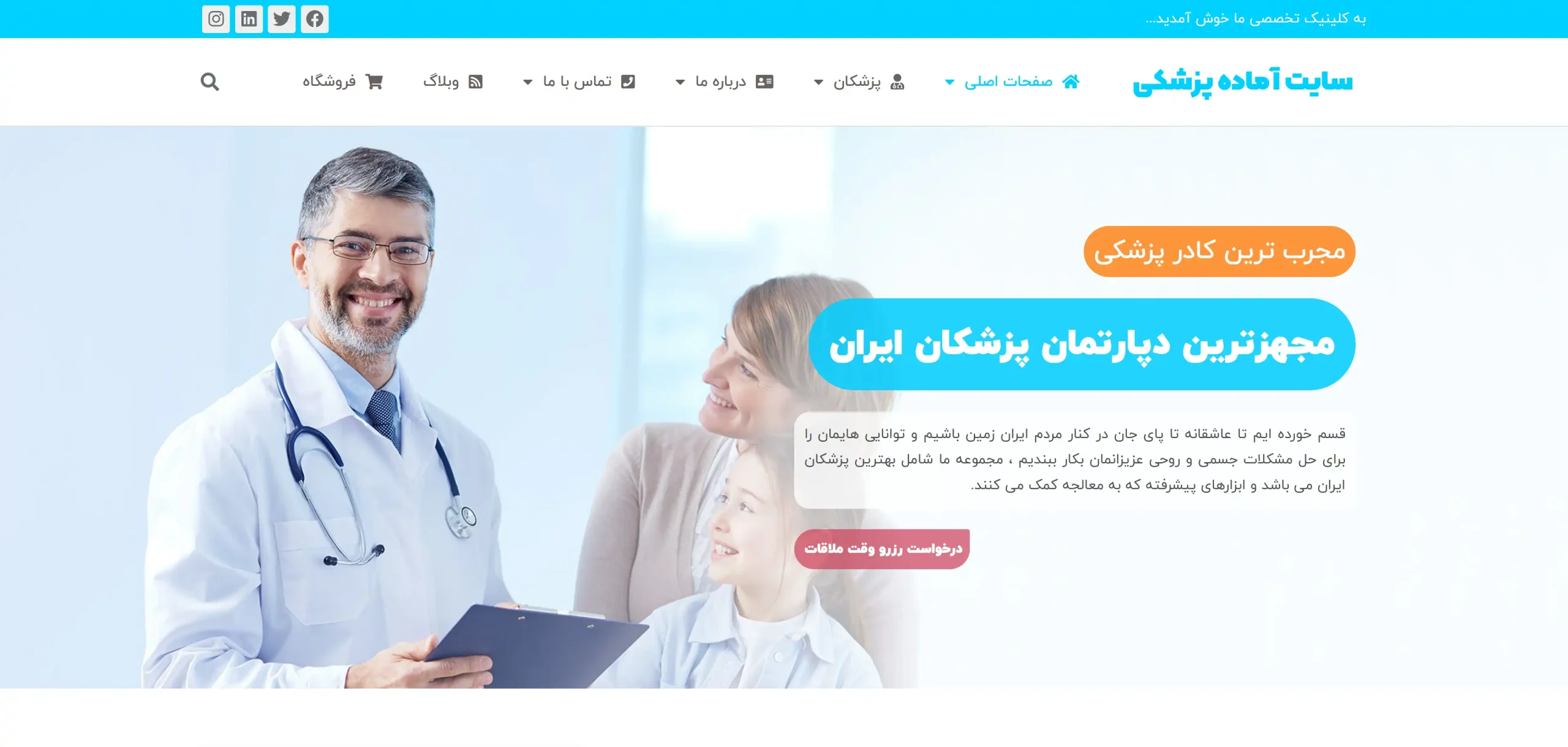
Your dedicated page
The homepage of a medical department or medical school website acts as a virtual showcase of the department, and its main purpose is to provide visitors with a quick and comprehensive overview.
In general, the key sections that appear on these pages are:
Mission & Overview:
Main focus: Express the department’s main mission (education, research, and clinical services).
Relevance: Provide a summary of the department’s values and goals to attract students, researchers, and patients.
News & Events:
Main focus: Latest achievements, published articles, seminars, conferences, and important announcements.
Relevance: Showcase the department’s current dynamics and activities.
Key Sections:
Main focus: Quick links to important sections of the site, such as:
Education: Admissions information, courses, curricula (for students).
Research: Laboratories, research focus areas, and collaboration opportunities (for researchers).
Clinical Services: Introduction to clinics, specialties, and scheduling (for patients).
About & Faculty:
Main focus: Introduction to the department chair and a link to a list of faculty members with their resumes.
Importance: Establishing trust and academic credibility.
Contact Information:
Main focus: Physical address, primary phone numbers, and important emails.
Introducing your team and staff:
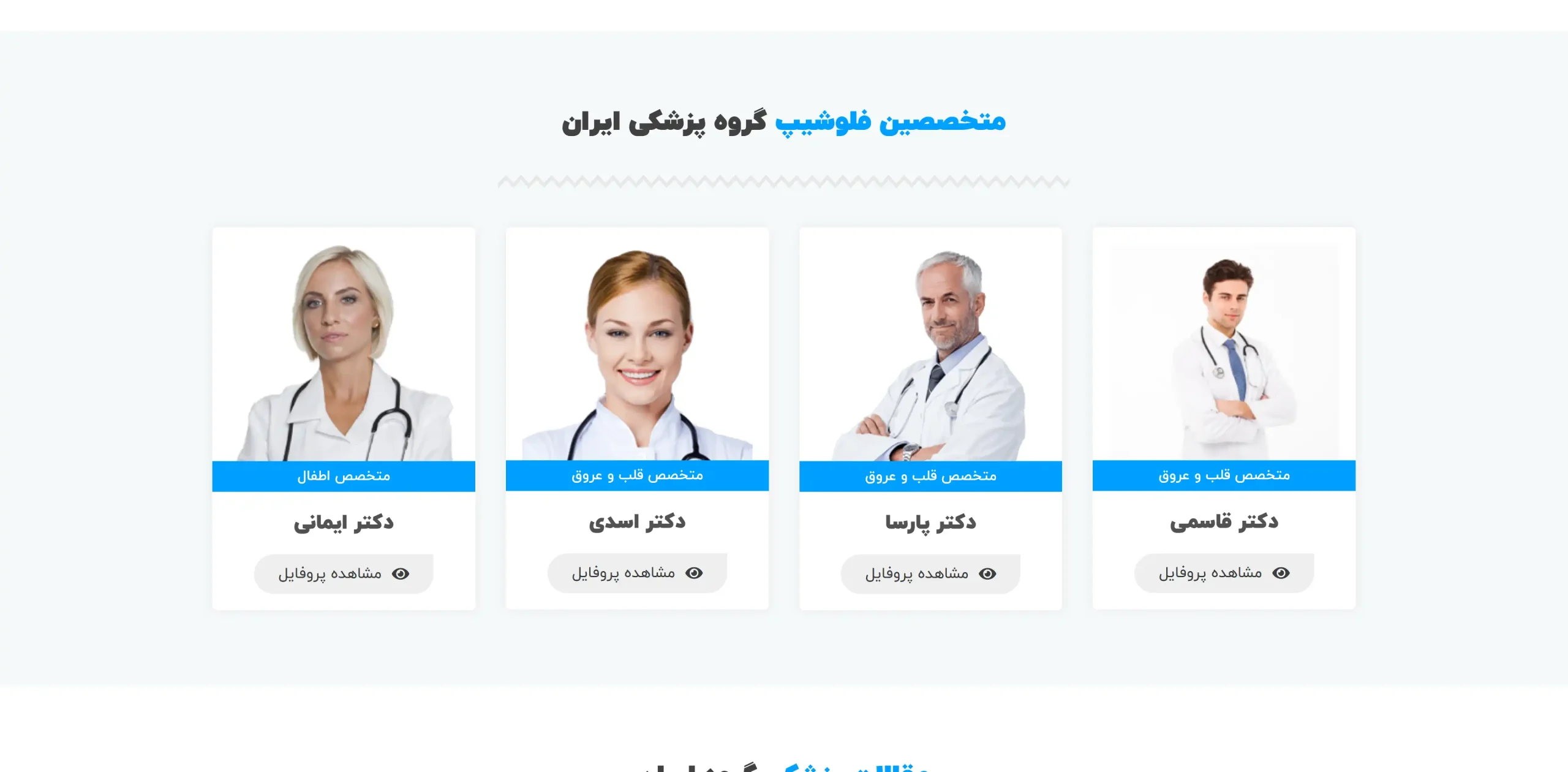
Profiles of team members and their services
The Faculty Directory is one of the most important pages in a medical department, as it showcases the academic credentials and strength of the department.
The main purpose of this page is to provide comprehensive and organized information about the specialists, professors, and researchers working in the department.
Key sections that can be found on this page are:
Member List:
Main Focus: A list of all faculty members in the department.
Essential Features: Usually, there is the ability to search (by name) and filter (by specialty, academic rank, or department) to quickly find the person you are looking for.
Individual Profiles:
Main Focus: For each member, there is a dedicated page that contains the following details:
Contact Information: Email, office phone number (if applicable).
Academic rank and job title: (e.g., Assistant Professor, Associate Professor, Professor, Department Head).
Main specialty and clinical area: (e.g., neurosurgery, internal medicine, nephrology).
Research areas: The areas in which the professor conducts research.
Recent publications and articles: Link to the list of articles in PubMed or ORCID.
Brief biography and work philosophy.
Departmental Divisions:
Main focus: Team members are often grouped by internal departmental divisions (e.g., cardiology, pediatrics, anatomy) to provide a clear organizational structure.
Importance: This page helps several groups:
Students: To identify supervisors or thesis committee members.
Patients: To select a specialist based on expertise and background.
External researchers: To find potential scientific collaborators with shared expertise.
Special introduction of your services:
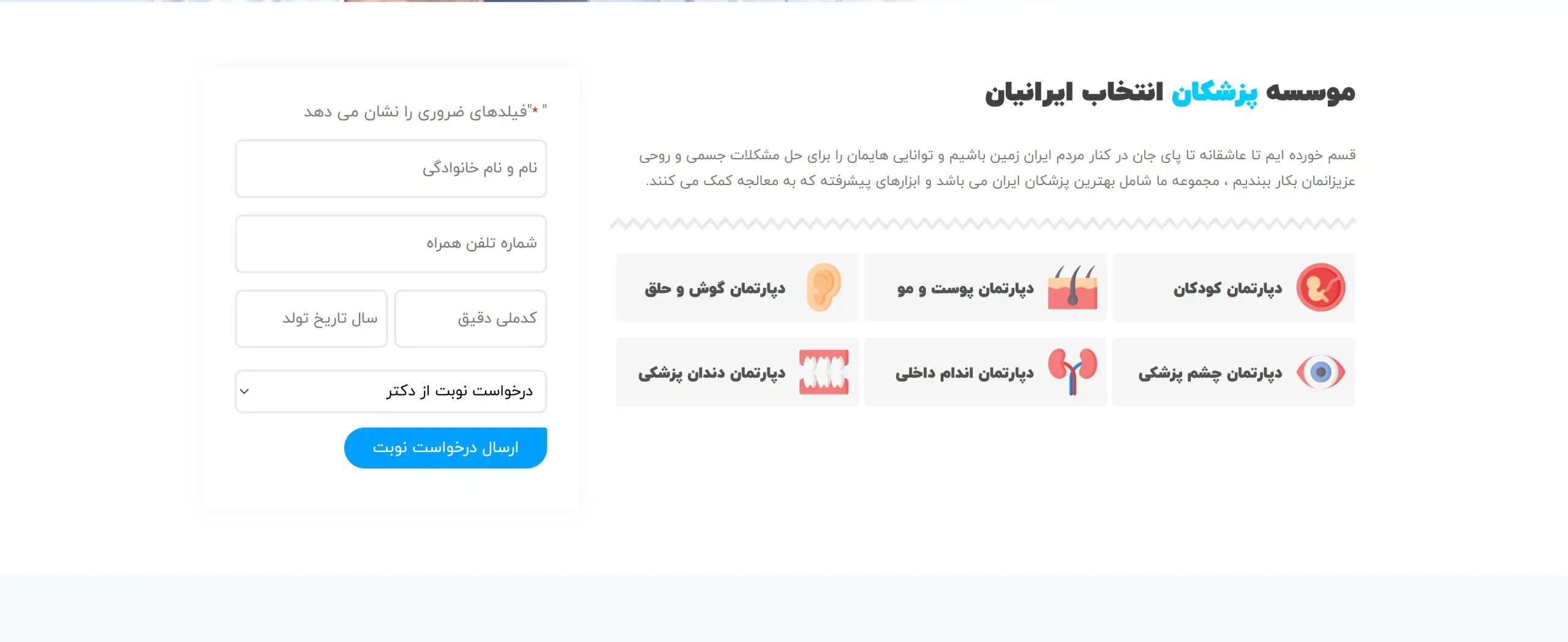
Special introduction of departments and services
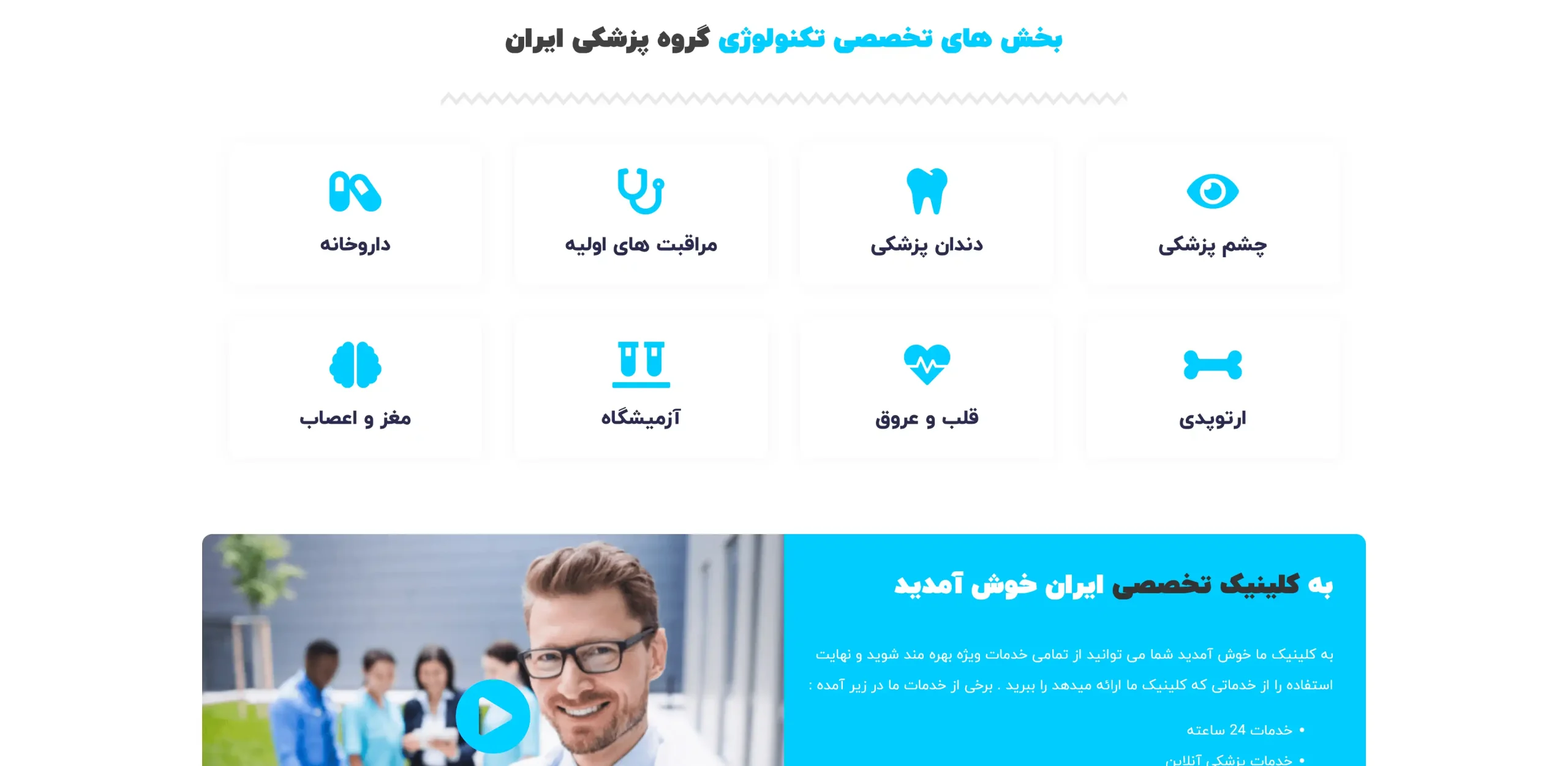
The Clinical Services page on a medical department’s website is where the department officially introduces the specialties and treatment facilities it offers to patients.
The main purpose of this page is to attract patients and referrers by showcasing the quality and breadth of clinical services.
Important sections that are usually seen on this page:
List of Clinical Specialties:
Main Focus: Provides a list of all active treatment departments.
Example: General Surgery, Internal Medicine, Cardiology, Endocrinology, Orthopedics, Radiology, etc.
Service Details:
Main Focus: For each specialty, there is a separate page or section that includes the following:
Introduction to the Treatment Team: Refers to the main physicians and subspecialists of the department.
Conditions and Diseases Covered: Explains what types of diseases are treated in this department.
Special Technologies and Equipment: Introducing advanced devices (e.g., surgical robot, linear accelerator).
Access & Appointments:
Main focus: Guiding patients to use services.
Includes: appointment phone numbers, clinic addresses, hours of operation, and sometimes a link to an online appointment system.
Patient Education:
Main focus: Providing resources to help patients learn more about diseases and their prevention (online brochures, health articles).
Online appointment booking (with online payment):
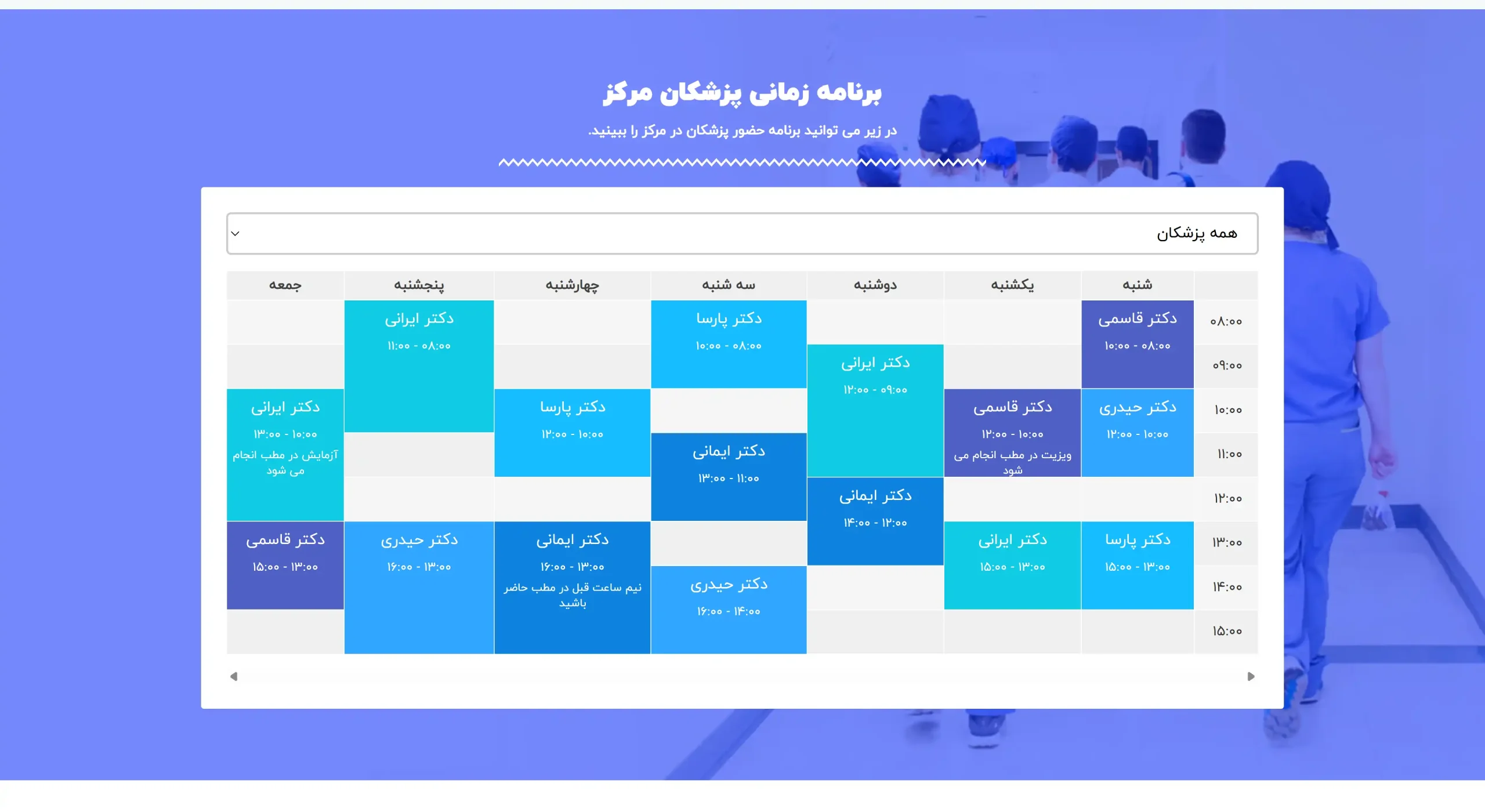
Online appointment booking and online payment
The online appointment booking page is a vital part of modern medical department websites, designed to facilitate patients’ access to clinical services.
Its main goal is to eliminate the need for phone calls and allow the patient to automatically select the time and doctor of their choice.
The process and key components of this page usually include the following steps:
Service Selection:
Main focus: The user must first determine what type of service they are scheduling (e.g., initial visit, follow-up visit, lab services, specialty injections).
Doctor/Specialty Selection:
Main focus: The user can select their preferred doctor (by name) or general specialty.
Note: The system should only display doctors who have open appointments at that specific time.
Date & Time Selection:
Main focus: Display the doctor’s availability calendar. Filled or out-of-hours times should be unselectable.
Patient Information & Confirmation:
Main focus: Collect patient identification and contact information.
Includes: Name, Surname, National ID, Mobile Phone Number (to send confirmation SMS).
Note: This section usually requires Login or Quick Registration.
Submission & Confirmation:
Main focus: After registering an appointment, the system issues a tracking code or final confirmation.
Confirmation method: Send an SMS or email containing the appointment details (time, doctor, location).
Importance: This page increases patient satisfaction, reduces call traffic, and optimizes the work schedule of clinics and doctors.
Blog (news and articles)
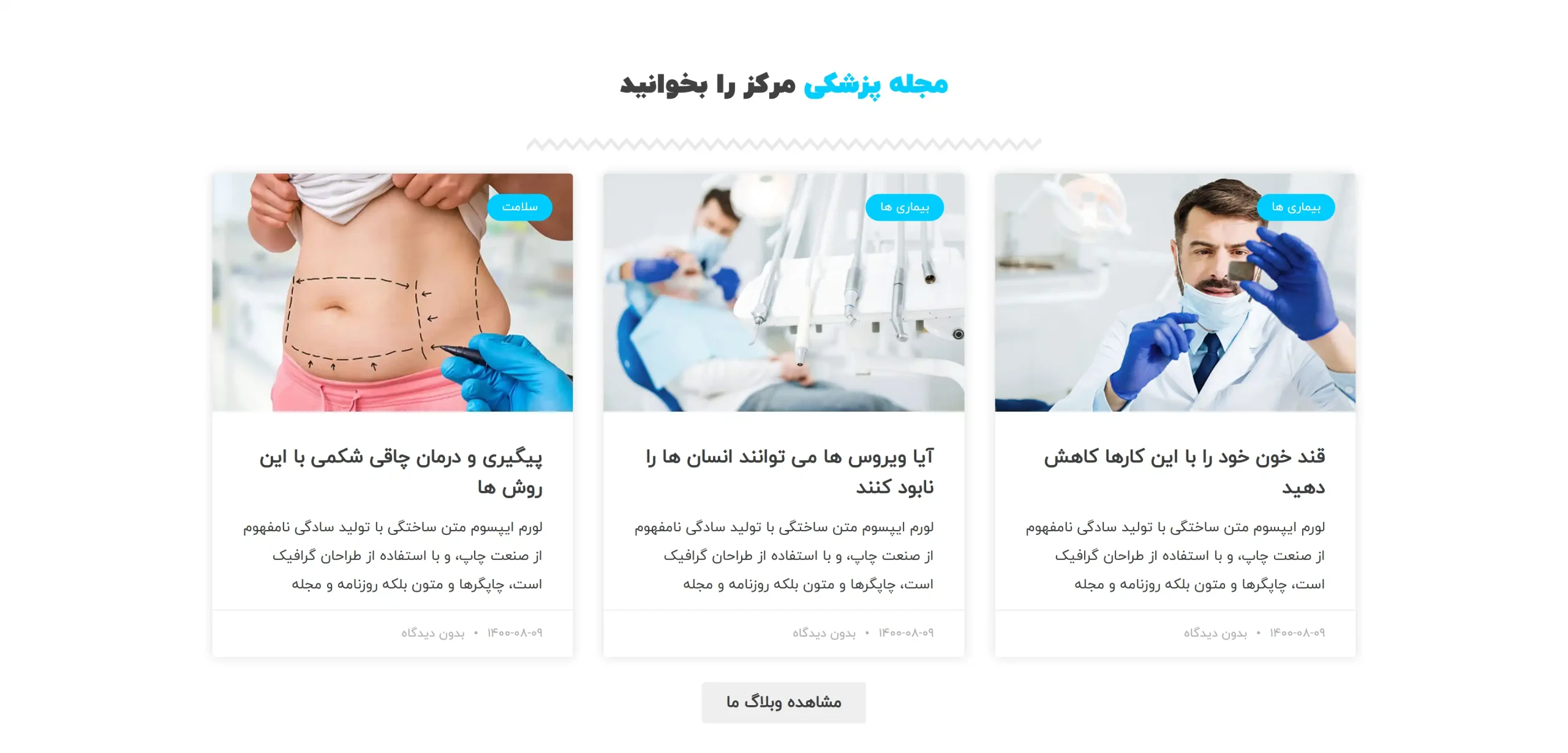
Professional article classification
The blog or articles section of a medical department’s website is more than just a news outlet; it is the department’s primary tool for health education, awareness raising, and thought leadership in the medical field.
The primary goal of a blog is to provide authoritative, simple-language scientific content to a general audience, students, and even other professionals.
Key components of this section include:
General Health Content:
Main focus: Articles that answer common questions people have about diseases, symptoms, prevention, nutrition, and healthy lifestyles.
Example: “Ten Ways to Reduce Your Risk of Heart Disease,” “Latest Findings on the Flu Vaccine.”
Department News and Research Highlights:
Main focus: Introducing new achievements by department researchers and physicians, and explaining the results of published scientific articles in simple language.
Importance: Highlighting domestic scientific innovations.
Expert Interviews:
Main Focus: Short interviews or profiles of leading physicians on the team to introduce their expertise and perspectives on current medical topics.
Clinical Service Information:
Main Focus: More in-depth explanations of specific services the department provides (e.g., explaining a new surgical technique or an advanced diagnostic procedure).
Categorization:
Main Focus: Articles are categorized by medical topic (cardiology, pulmonary, internal medicine, psychology) so that the user can quickly find the content they are looking for.
In short, the blog/articles are the department’s bridge to the public, strengthening scientific credibility by providing useful and up-to-date information.
Other features of medical department website design with online appointment booking
- Responsive design
- Direct banking portal
- Receiving the National Trust Symbol
- Possibility to insert bilingual content or CV
- Possibility to convert to a personal site
- Smart and floating appointment booking
- SEO Base (ability to get rank 1 on Google)
- Unlimited capabilities (number of doctors, profiles, reservations, etc.)